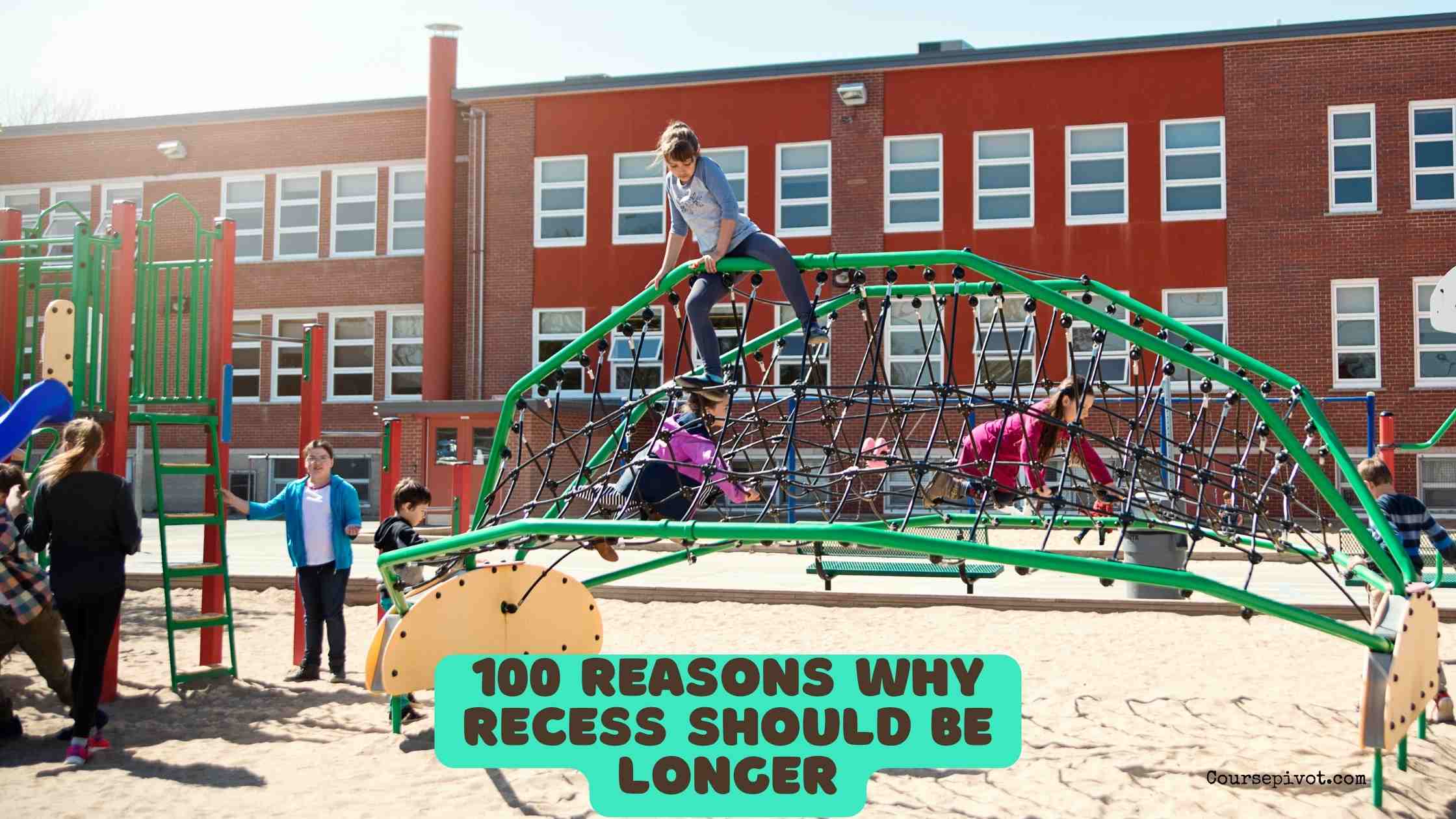
Recess isn’t just “playtime.”
It’s the only part of the school day when kids are allowed to be kids—running, laughing, inventing games, falling down, getting back up, arguing over rules, making up, breathing fresh air, feeling sunlight on their faces. In a world that keeps asking children to sit still, focus harder, test better, and grow up faster, recess is the last honest break left.
And yet schools keep shortening it.
Some cut it to 15 minutes. Some eliminate it entirely in favor of more “instructional minutes.” Studies show what most teachers and parents already know intuitively: longer recess improves attention spans, reduces classroom disruptions, lowers anxiety, boosts physical health, strengthens friendships, and even raises academic performance.
This list isn’t 100 polite research citations (though the evidence is overwhelming).
It’s 100 real, human, sometimes silly, sometimes serious reasons why recess should be meaningfully longer—20, 30, 45, or even 60 minutes a day—because children are not machines, and learning doesn’t happen only at desks.
Here are 100 reasons recess should be longer — straight from playground logic, child development science, teacher observations, and common sense.
- Kids need movement to reset their brains after sitting for hours.
- Short recess = pent-up energy → more fidgeting and disruptions later.
- Longer recess dramatically reduces bullying incidents (kids work out conflicts on the playground).
- Children learn social skills best through unstructured play—not through forced group activities.
- Recess is the only time many kids get real exercise all day.
- Obesity rates are skyrocketing; longer recess is free prevention.
- Vitamin D from outdoor time improves mood and immune function.
- Fresh air literally clears the mind—indoor air quality in classrooms is often poor.
- Kids who play hard concentrate better during lessons (Finland knows this).
- Recess reduces symptoms of ADHD without medication in many cases.
- Short breaks lead to decision fatigue; longer ones allow real mental recovery.
- Play fosters creativity—kids invent games, stories, rules that no curriculum can teach.
- Unstructured play builds executive function (planning, problem-solving, self-control).
- Kids learn negotiation, compromise, and leadership on the blacktop.
- Longer recess = fewer trips to the nurse’s office for “stomachaches” caused by stress.
- Children who get more recess report feeling happier at school.
- Teachers get a break too—classrooms are calmer after adequate playtime.
- Recess is often the only place introverted kids feel safe to connect.
- Outdoor time reduces nearsightedness (myopia epidemic is real).
- Kids learn risk assessment by climbing, jumping, and occasionally falling.
- Short recess forces rushed play → more accidental injuries from chaos.
- Longer recess lets kids finish the games they start instead of always leaving mid-story.
- Play lowers cortisol (stress hormone) levels.
- Recess is equity—kids from all backgrounds get the same chance to run and laugh.
- Many kids have no safe place to play after school; recess is their only shot.
- Physical activity during the day improves sleep quality at night.
- Longer recess = more chances for spontaneous kindness (helping someone up, sharing a toy).
- Kids develop empathy by seeing how their actions affect others during free play.
- Recess reduces screen-time cravings and digital dependency.
- Active play boosts brain-derived neurotrophic factor (BDNF) → better memory & learning.
- Short recess creates a “sugar crash” feeling right after lunch—longer helps stabilize energy.
- Kids with sensory needs regulate better with big movements outdoors.
- Recess is where friendships are actually made—not during forced “turn and talk.”
- Longer recess gives teachers time to eat lunch without students interrupting.
- Children learn boundaries and consent through playground negotiations.
- Outdoor time improves eyesight and reduces eye strain from screens/whiteboards.
- Recess decreases the need for punitive discipline later in the day.
- Kids who play outside are less likely to develop anxiety and depression long-term.
- Play stimulates the prefrontal cortex—exactly what school wants to develop.
- Recess is the only time kids can be loud without being shushed.
- Short recess = more tattling; longer = more self-resolution of conflicts.
- Children burn calories and build muscle memory through running, climbing, chasing.
- Recess lets kids experience joy that isn’t tied to grades or performance.
- Longer recess reduces teacher burnout—classrooms feel more manageable.
- Play increases dopamine naturally—no need for reward stickers or token systems.
- Kids learn persistence by trying (and failing) at games they invent.
- Recess is cultural—kids pass down hand-clap games, rhymes, jump-rope tricks.
- Outdoor play connects kids to nature in an increasingly indoor childhood.
- Longer recess gives time for imaginative play—forts, stories, “school” played by kids.
- Children with trauma or high ACE scores often regulate best through big body play.
- Recess reduces the “I’m bored” complaints that plague classrooms.
- Active kids have better cardiovascular health starting young.
- Longer recess = more chances for spontaneous laughter.
- Play builds resilience—kids fall, get up, try again without adults hovering.
- Recess is one of the few places kids can lead without adult permission.
- Short recess creates artificial scarcity → more fighting over equipment.
- Longer recess allows for cooperative games that actually teach teamwork.
- Outdoor time improves focus for kids with attention difficulties.
- Recess gives the brain a true “diffuse mode” break essential for learning.
- Kids who get more recess show higher levels of self-regulation in class.
- Play reduces aggression—kids who run it out fight less inside.
- Recess is where kids learn to include others (or sadly, exclude—and then reflect).
- Longer recess = more time for gross-motor development that desks destroy.
- Children explore leadership roles naturally during free play.
- Recess lowers absenteeism—kids want to come to school when they get to play.
- Outdoor play improves mood regulation for the rest of the day.
- Kids with asthma breathe better outdoors than in stuffy classrooms.
- Recess reduces reliance on medication for hyperactivity in some cases.
- Play builds confidence—mastering a game or a jump rope trick matters.
- Longer recess allows time for quiet kids to join in on their own terms.
- Recess is the original social-emotional learning curriculum.
- Kids learn cause-and-effect through play (push too hard on the swing → fall).
- Outdoor time resets circadian rhythms better than indoor fluorescent lights.
- Recess decreases the “afternoon slump” teachers dread.
- Children develop spatial awareness and coordination through chasing and climbing.
- Longer recess = more opportunities for cross-age friendships.
- Play lowers blood pressure and heart rate in stressed children.
- Recess gives kids autonomy in a day full of adult-directed activities.
- Kids who play more are more willing to take academic risks later.
- Recess is where imagination runs wild—no rubric required.
- Longer recess reduces the pressure to “get it right” every second.
- Outdoor play strengthens immune systems (exposure to diverse microbes).
- Recess is the only time many kids get to experience unstructured joy.
- Play improves divergent thinking—the foundation of real creativity.
- Longer recess allows time for restorative play after emotional moments.
- Kids learn patience by waiting for turns on swings or slides.
- Recess reduces teacher stress—happy kids = easier afternoons.
- Outdoor time improves vitamin D levels → better mood & bone health.
- Recess is where kids practice forgiveness after playground fights.
- Longer recess gives time for big-body movement that calms the nervous system.
- Play builds grit—kids keep trying even when they lose.
- Recess is the original mindfulness—kids are fully present when they play.
- Children develop better hand-eye coordination through ball games.
- Longer recess = fewer discipline referrals for “not sitting still.”
- Play increases oxytocin → stronger feelings of connection & trust.
- Recess is where kids learn that losing a game isn’t the end of the world.
- Outdoor time reduces symptoms of seasonal affective disorder in winter months.
- Longer recess lets kids experience flow state—deep, joyful immersion.
- Recess is the only part of school that feels like freedom.
- Because childhood is short, desks are hard, and every extra minute of real play gives kids one more chance to just be kids.
Conclusion
Recess isn’t a luxury—it’s a necessity.
The science is clear: longer recess improves behavior, focus, physical health, mental health, social skills, academic performance, and overall happiness. Countries like Finland figured this out decades ago (75 minutes of daily outdoor breaks, top PISA scores). The U.S. keeps cutting it in the name of “more learning time,” then wonders why kids are burned out, anxious, and struggling to pay attention.
Give them back their 30, 45, or even 60 minutes.
Let them run. Let them fall. Let them invent. Let them breathe.
Because a child who gets to play freely is a child who comes back to the classroom ready to learn—not a child who’s been forced to sit still until they explode.
Recess isn’t wasted time.
It’s the most important time of the school day.