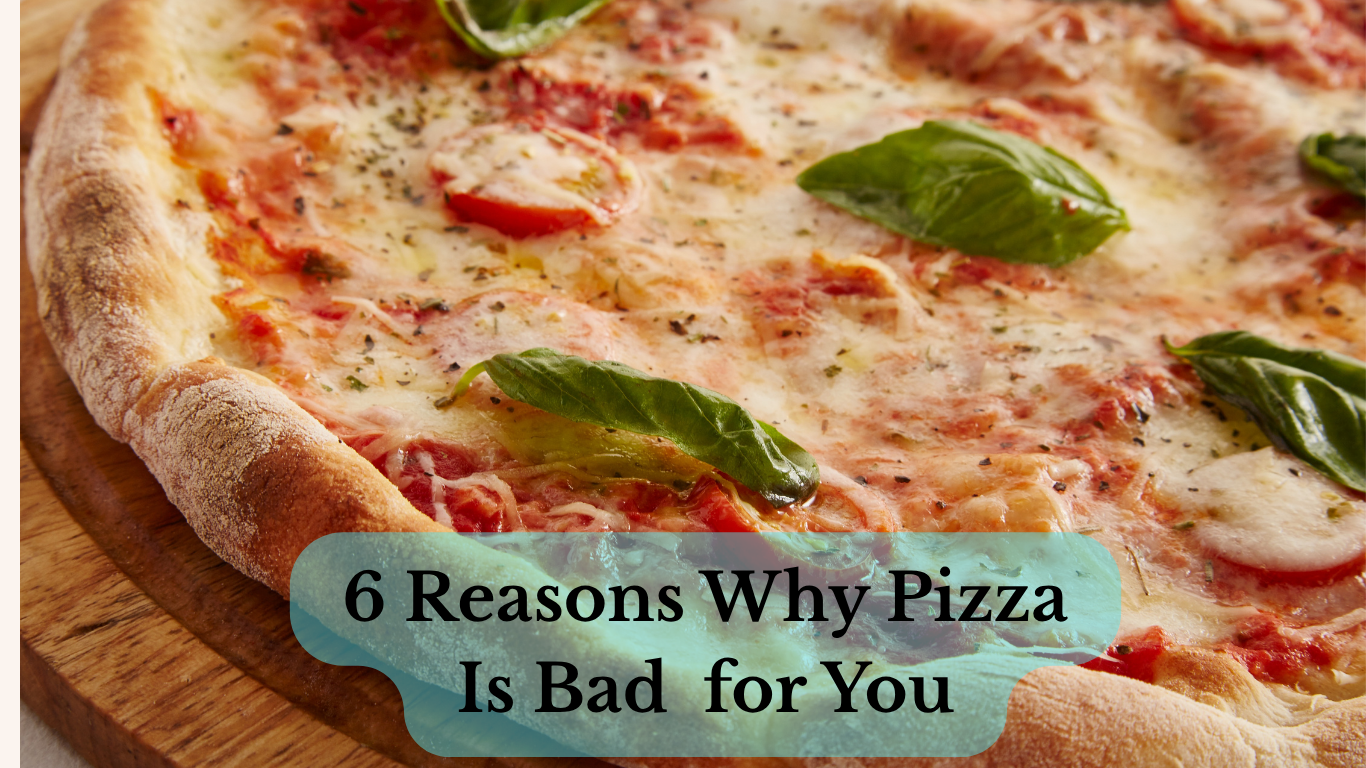
Have you ever reached for a second slice — or a third — telling yourself that you would be more disciplined tomorrow, while that warm, cheese-covered, perfectly imperfect triangle of joy made every nutritional intention feel temporarily negotiable? Pizza is one of the most universally loved foods on earth, and for very good reason. But beneath its considerable deliciousness lies a nutritional profile that, consumed regularly and in typical commercial quantities, raises some genuinely significant health concerns worth understanding clearly. This blog examines 6 honest, well-evidenced reasons why pizza — particularly the commercially produced, regularly consumed variety — may not be doing your health the favours its taste suggests it deserves.
1. It Is Exceptionally High in Sodium — and Most People Do Not Realise How Much
If there is a single nutritional dimension of commercial pizza that deserves the most urgent attention, it is its sodium content — a figure that consistently and significantly exceeds what most consumers estimate when they sit down to eat it.
A single slice of a standard commercial pepperoni pizza contains approximately 760 to 1,000 milligrams of sodium — per nutritional data from major pizza chains and food composition databases. The American Heart Association recommends a daily sodium intake of no more than 2,300 milligrams, with an ideal target of 1,500 milligrams for most adults. A standard serving of two to three slices — a modest amount by most people’s practical standards — can therefore deliver between 1,500 and 3,000 milligrams of sodium in a single meal, potentially meeting or exceeding the entire daily recommended limit before any other food has been consumed.
The sources of sodium in commercial pizza are multiple and compounding. The dough contains salt. The tomato sauce — particularly in commercially produced varieties — is heavily salted. The cheese contributes significant sodium. Processed toppings including pepperoni, sausage, ham, and anchovies add further substantial amounts. The cumulative effect of these individually modest contributions produces a finished product with a sodium load that rivals or exceeds some of the saltiest processed foods in the typical Western diet.
Per research on dietary sodium and cardiovascular health published in the New England Journal of Medicine, high sodium intake is one of the most significant modifiable risk factors for hypertension, stroke, and cardiovascular disease globally — contributing to an estimated three million deaths annually. The challenge with pizza as a sodium source is its social and perceptual framing — it does not taste as salty as a packet of crisps or a bowl of soup, making its sodium content significantly easier to underestimate and overconsume.
2. The Refined Carbohydrate Base Drives Blood Sugar Spikes
The crust of a standard commercial pizza — white, refined, and typically produced from highly processed flour with minimal fibre content — is among the dietary factors most directly associated with the rapid blood glucose elevation that contributes to insulin resistance, type 2 diabetes, and the energy crashes that follow high-glycaemic meals.
Refined white flour is processed in a way that removes the bran and germ components of the wheat grain — stripping out the fibre, vitamins, and minerals that slow digestion and moderate the rate at which glucose enters the bloodstream. What remains is a rapidly digestible carbohydrate that produces a swift and significant blood glucose spike, followed by the compensatory insulin response that drives blood sugar back down and triggers the energy crash and renewed hunger that most people recognise as the post-pizza slump.
Per research on glycaemic response and metabolic health, the glycaemic index of a typical white pizza crust is comparable to white bread — a food widely recognised as a high-glycaemic dietary component that nutritional guidance consistently recommends limiting. A large pizza crust consumed in a typical serving provides between 40 and 60 grams of refined carbohydrates — a substantial glycaemic load that is further amplified by the fats and proteins in the toppings, which affect the rate of gastric emptying and glucose absorption in complex ways.
For individuals with type 2 diabetes, pre-diabetes, insulin resistance, or metabolic syndrome — conditions affecting an estimated one in three adults in many developed nations per public health data — the refined carbohydrate content of regular commercial pizza represents a particularly significant dietary concern.
3. Its Caloric Density Is Significantly Higher Than It Appears
Pizza occupies an interesting psychological space in the dietary landscape — it feels like a reasonable meal, it is served in identifiable slices that create a natural portion framework, and yet its caloric density is significantly higher than most people estimate when they are eating it.
A single slice of a standard large commercial pizza contains between 250 and 400 calories, depending on toppings and crust thickness — per nutritional databases from major chains and food composition research. A typical eating occasion involving three to four slices therefore delivers between 750 and 1,600 calories — representing between 37% and 80% of the average adult’s daily recommended caloric intake in a single meal.
Several factors contribute to the underestimation of pizza’s caloric load. The cheese — present in generous quantities on most commercial pizzas — is calorically dense, with full-fat mozzarella delivering approximately 85 calories per ounce. Processed meat toppings add further caloric density through their fat content. Deep pan and stuffed crust varieties add substantially more calories than their thin-crust equivalents — a distinction that is often inadequately reflected in consumers’ mental accounting.
Per research on portion size perception and caloric estimation, people consistently underestimate the caloric content of familiar, socially normalised foods — and pizza, as one of the most socially normalised foods in the Western diet, is subject to this underestimation effect at higher rates than less familiar foods. The calories in pizza are not hidden — they are simply very easy not to think about in the moment of eating.
4. Processed Meat Toppings Carry Documented Health Risks
The most popular pizza toppings globally — pepperoni, salami, sausage, ham, and bacon — are processed meats, and processed meat consumption is one of the most consistently and robustly documented dietary risk factors in the nutritional science literature.
In 2015, the World Health Organisation’s International Agency for Research on Cancer classified processed meat as a Group 1 carcinogen — the same category as tobacco smoking and asbestos — on the basis of sufficient evidence linking processed meat consumption to colorectal cancer. The classification does not equate the risk level of processed meat with that of smoking, but it does reflect the scientific community’s consensus that the carcinogenic association is real, consistent, and not explained by confounding factors.
Per research on processed meat consumption and cancer risk, each 50-gram daily serving of processed meat — approximately two to three slices of pepperoni — is associated with an 18% increased risk of colorectal cancer, per the WHO’s assessment of the available evidence. A pizza topped with pepperoni, sausage, and ham may deliver significantly more than 50 grams of processed meat in a single meal.
Beyond cancer risk, processed meats are high in saturated fat, sodium, and preservative compounds including nitrites and nitrates — which interact with proteins in the digestive process to form nitrosamines, compounds with independently documented carcinogenic properties. The combination of these factors makes the processed meat topping dimension of regular pizza consumption one of the most genuinely concerning from a long-term health perspective.
5. The Cheese Content Delivers a Substantial Saturated Fat Load
Cheese is, nutritionally speaking, a food of considerable complexity — it provides protein, calcium, and various micronutrients, and the research on its health effects is more nuanced than its saturated fat content alone would suggest. However, the quantities in which cheese is applied to commercial pizza — particularly in American-style deep pan and stuffed crust varieties — move well beyond the moderate consumption that nutritional nuance can comfortably accommodate.
A standard large commercial pizza contains between one and two cups of mozzarella cheese per typical preparation — delivering between 10 and 20 grams of saturated fat from the cheese alone, before any additional fat from processed meat toppings, the crust, or the olive oil or butter applied during preparation. Per the American Heart Association’s dietary guidelines, the recommended daily limit for saturated fat is 13 grams for a person consuming 2,000 calories per day.
A pizza meal that delivers the entire recommended daily saturated fat allowance — or exceeds it — in a single sitting creates a dietary context in which every other food consumed that day must carry zero saturated fat to remain within guidelines. In practice, this is never how the rest of the day’s eating unfolds.
Per research on dietary saturated fat and cardiovascular health, sustained high saturated fat consumption is associated with elevated LDL cholesterol levels — the form associated with atherosclerotic plaque formation — and correspondingly elevated cardiovascular disease risk. The cheese-heavy pizza, consumed regularly rather than occasionally, contributes to this risk accumulation in a way that its social normalisation as a casual meal makes easy to overlook.
6. Commercial Pizza Encourages Overeating Through Its Design and Social Context
The final reason on this list is perhaps the most practically significant — because it operates not through the nutritional composition of pizza itself but through the behavioural and environmental factors that systematically undermine the portion control that would otherwise moderate its health impact.
Commercial pizza is specifically designed for group eating — arriving in large, visually generous portions, creating a social obligation to eat while it is hot, and structured in a way that makes stopping at a nutritionally appropriate portion feel socially awkward and personally unsatisfying. The combination of high palatability, large serving sizes, and social eating context creates what food scientists and behavioural researchers describe as an obesogenic eating environment — one that systematically promotes consumption beyond genuine hunger or nutritional need.
Per research on environmental influences on food intake by Brian Wansink and subsequent researchers in the field of eating behaviour, people consistently eat more when food is presented in larger portions, when eating in groups, and when the social norms around the table encourage continued eating. Pizza satisfies all three conditions simultaneously — it arrives in large quantities, it is almost always consumed socially, and the “just one more slice” social dynamic is one of the most consistently observed eating behaviours in the food environment research literature.
The ordering model of commercial pizza further undermines portion management. Per research on group food ordering behaviour, people ordering pizza in groups consistently order more than they would individually — driven by social dynamics, by the per-person cost efficiency of larger orders, and by the tendency to anchor portion expectations to the total quantity present rather than genuine hunger.
The problem with pizza is not only what it contains — it is what it does to the conditions under which eating decisions are made. A food that is delicious, highly palatable, socially charged, and served in quantities that exceed nutritional need is a food specifically suited to produce overconsumption in the majority of the people who encounter it.
Key Takeaways
The six reasons examined in this blog — excessive sodium, refined carbohydrate load, underestimated caloric density, processed meat risks, saturated fat content, and the behavioural environment that encourages overconsumption — do not constitute a case that pizza should never be eaten. They constitute a case for eating it with a clear understanding of what it contains, how frequently it appears in the diet, and what the cumulative health consequences of regular, uncritical consumption look like over time.
Pizza, eaten occasionally, in reasonable portions, with vegetable-forward toppings, on a thinner crust, and prepared from higher-quality ingredients, occupies a very different nutritional space from the commercial, processed-meat-laden, deep-pan variety consumed two or three times per week as a dietary staple. The distinction matters — and making it deliberately, rather than defaulting to the commercially available and socially normalised version, is one of the most practical applications of nutritional literacy available.
Per nutritional research on dietary patterns and long-term health outcomes, no single food is responsible for chronic disease — dietary patterns, consumed consistently over years and decades, are the relevant unit of analysis. Pizza consumed occasionally within an otherwise varied, vegetable-rich, whole-food dietary pattern is unlikely to produce measurable harm. Pizza as a regular dietary cornerstone, in commercial form and typical quantities, is a different conversation entirely.
Enjoy the pizza. Know what is in it. Eat it with intention rather than habit. And perhaps — just occasionally — stop at two slices.