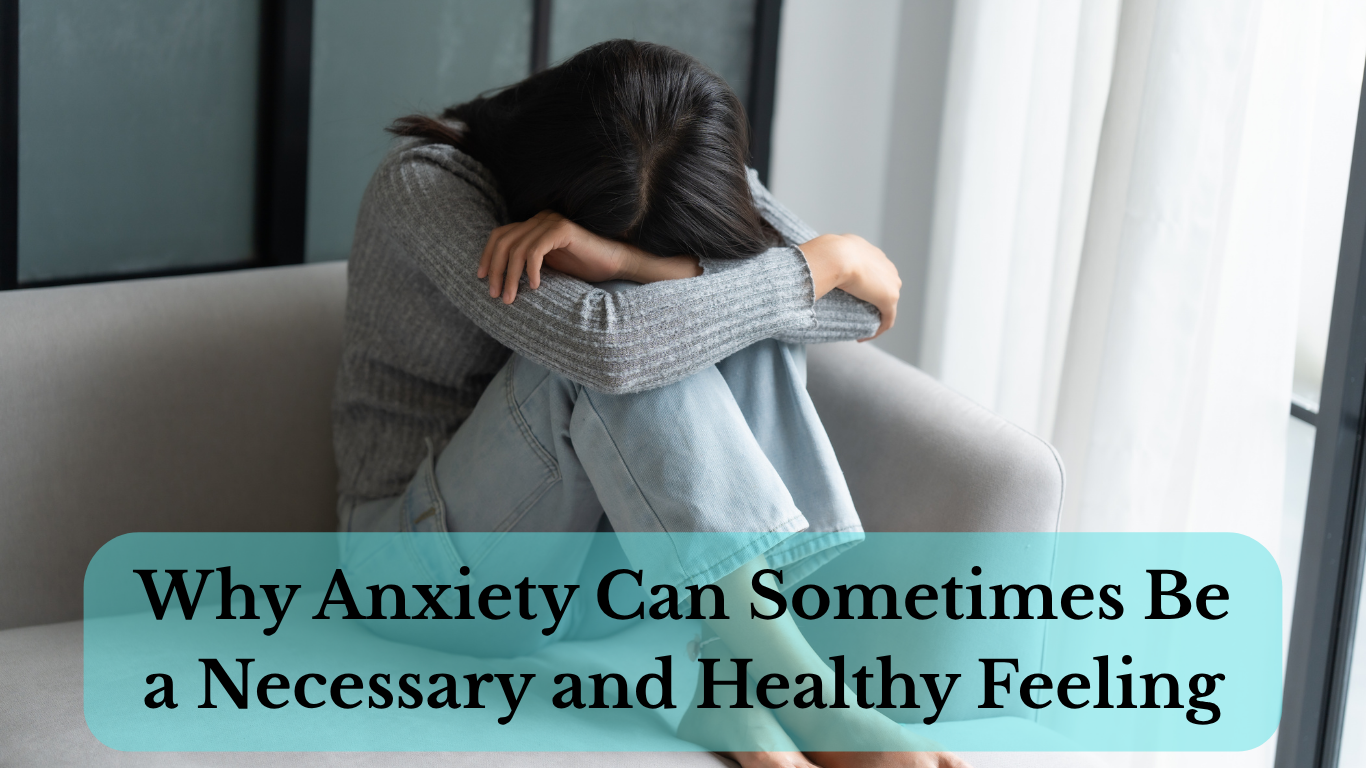
Have you ever noticed the specific quality of anxiety that arrives before something that genuinely matters — the presentation you have prepared for, the conversation you need to have, the audition or the interview or the first day of something new — and wondered whether the feeling itself, uncomfortable as it is, might be doing something useful rather than simply making you miserable? In a cultural landscape that treats anxiety primarily as a disorder to be treated, a symptom to be managed, and an obstacle to be overcome, the more complicated and more honest picture of anxiety as a feeling that sometimes genuinely serves the person experiencing it rarely receives the sustained attention it deserves. This blog examines why anxiety, understood accurately, is not simply a malfunction of the nervous system but a signal whose presence sometimes reflects the appropriate response of a functioning mind to genuinely challenging circumstances.
Table of Contents
The Essential Distinction — Helpful and Harmful Anxiety
Before examining why anxiety is sometimes necessary and healthy, the most important distinction available in this discussion deserves clear establishment — the distinction between anxiety that is proportionate to genuine circumstances and serves a functional purpose and anxiety that is disproportionate, persistent, and impairs rather than supports functioning.
Per research on anxiety and its functional dimensions, the most useful conceptual framework distinguishes between anxiety as a normal, adaptive emotional response to genuine uncertainty or threat – what clinicians sometimes call “normal anxiety” – and anxiety as a clinical condition whose severity, persistence, and impairment significantly exceed what any genuine circumstances justify. The two categories share the subjective experience of anxious feelings — the physiological arousal, the cognitive preoccupation, and the specific quality of unease about future outcomes — but differ fundamentally in their relationship to real-world circumstances and their functional consequences.
The blog that follows addresses the first category — the anxiety that arises in response to genuine challenges, that motivates appropriate preparation and attention, and that resolves when the challenging circumstance has been navigated. This is not the anxiety whose unmanaged severity erodes wellbeing and requires treatment — it is the anxiety whose honest understanding reveals it as the signal it was designed to be rather than the problem it is often treated as.
1. Anxiety Is the Evolutionary Product of a System Designed to Keep You Alive
The first and most foundational reason anxiety is sometimes necessary is that it is not a design flaw but a design feature — the output of an evolutionary system whose specific function was the detection of threat and the mobilisation of the physical and cognitive resources required to respond to it.
Per evolutionary psychology research on anxiety and threat detection, the anxiety response evolved as the nervous system’s mechanism for detecting potential dangers before they became actual ones – for scanning the environment for threats whose anticipation allowed preparation and avoidance whose absence would have been fatal in the ancestral environments where the system was shaped. The anxious ancestor who noticed and responded to the signs of predator presence survived; the non-anxious ancestor who did not notice or did not respond did not survive to pass on their genes. Anxiety, in this evolutionary context, was not a problem — it was the difference between life and death.
Per neuroscience research on the anxiety response, the system that produces anxiety — centred on the amygdala’s threat detection function and the HPA axis’s stress hormone cascade — activates a specific package of physiological and cognitive changes whose effects are precisely calibrated to the threat response. Attention narrows and intensifies toward the source of threat. Memory retrieval of relevant past experiences accelerates. Physiological arousal increases in ways that prepare the body for the physical demands of fight or flight. And conscious awareness of risk and its potential consequences becomes hyperactivated in ways that motivate the risk-avoidance or risk-preparation behaviour that the threat requires.
The honest acknowledgement of this evolutionary function is the foundation for understanding why anxiety cannot be simply eliminated without cost — the system whose output is anxious feelings is the same system that detects genuine threats, motivates genuine preparation, and sustains the attention that genuinely challenging tasks require. The goal of anxiety management is not the elimination of the system but the calibration of its output to the genuine demands of the circumstances producing it.
2. Anxiety Motivates Preparation and Performance in High-Stakes Situations
The second reason anxiety is sometimes necessary is its specific role as a performance motivator — the mechanism through which the recognition that something matters produces the preparation, the effort, and the sustained attention that genuine performance requires.
The relationship between anxiety and performance is one of the most extensively studied in psychology — shaped most famously by the Yerkes-Dodson law, which describes the inverted U-shaped relationship between arousal and performance. Per this well-replicated finding, performance is maximised at an intermediate level of arousal — too little arousal produces the low-energy, insufficiently motivated performance of the underaroused person, while too much arousal produces the cognitively impaired performance of the overwhelmed person. The optimal performance zone sits between these extremes at a level of arousal that motivates without overwhelming.
Anxiety provides this motivating arousal in the context of high-stakes performance situations — the examination, the presentation, the athletic competition, the creative performance — whose outcomes genuinely matter and whose successful navigation genuinely requires the elevated attention, the heightened cognitive engagement, and the motivational intensity that mild to moderate anxiety reliably produces.
Per research on anxiety and academic performance, students who experience moderate anxiety before examinations demonstrate better preparation behaviour and better performance outcomes than those who experience very low anxiety – because the moderate anxiety motivates the study and preparation that very low anxiety does not activate. The student who is not at all anxious about tomorrow’s examination may not study effectively tonight; the student who is moderately anxious is more likely to study with the focused attention that the examination will reward.
The practical implication is that the anxiety experienced before a genuinely important performance situation is not simply an obstacle to good performance — it is, within the range of moderate arousal, one of the mechanisms through which good performance is enabled. The performer who manages their anxiety to zero has also managed away some of the motivating arousal that optimal performance requires.
3. Anxiety Signals That Something Genuinely Matters to You
The third reason anxiety is sometimes necessary and valuable is the specific information it provides about personal values — the honest signal that the situation producing anxiety is one that genuinely matters, that the outcome has genuine significance, and that genuine care is present in relation to it.
Per research on anxiety and value significance, the situations that most reliably produce genuine anxiety are those in which the person recognises that they genuinely care about the outcome — that the result has real implications for something they value. The examination that produces anxiety is an examination whose outcome matters to the examinee. The relationship conversation that produces anxiety is a conversation about a relationship that matters. The creative work that produces anxiety before its presentation is creative work that the person cares about having received well.
The specific value of this signal is its revelation of genuine investment — the honesty of the feeling in the presence of something that matters as opposed to the indifference of the feeling in the presence of something that does not. The person who feels no anxiety about the presentation they are about to give either has a degree of confident competence that has genuinely resolved the uncertainty of the outcome or does not care whether it goes well — and these two states are very different in their implications for how the presentation will be approached and delivered.
Per research on emotional information and decision-making, the anxiety that signals genuine care about an outcome is one of the most honest available indicators of what a person genuinely values – more honest in many cases than their stated priorities, because anxiety is not strategically manageable in the way that explicit self-report is. The things that make us genuinely anxious reveal what we are genuinely invested in, and this revelation is genuine information about the self whose honest recognition serves self-knowledge.
4. Anxiety Sharpens Attention and Increases Vigilance in Genuinely Uncertain Situations
The fourth reason anxiety is sometimes genuinely valuable is the specific cognitive effect of appropriate anxiety on attentional focus — the sharpening of attention toward relevant threat-related information that anxiety reliably produces and that genuinely uncertain situations specifically require.
Per cognitive psychology research on anxiety and attention, the anxious state produces a specific pattern of attentional allocation that prioritises threat-relevant information and increases the vigilance directed toward potential sources of difficulty. In genuinely uncertain situations — the medical symptom that needs monitoring, the business situation that contains genuine risk, the social situation that requires careful navigation — this heightened vigilance is specifically useful because the information most relevant to the situation is precisely the threat-relevant information that anxious attention most reliably detects.
The evolutionary logic of this cognitive effect mirrors the physical logic described above — the hunter who is anxious about potential predators notices the movement in the grass that the non-anxious hunter misses. The investor who is appropriately anxious about market risk notices the warning signs that the non-anxious investor dismisses. The parent who is appropriately anxious about their child’s wellbeing notices the subtle signs of difficulty that the non-anxious parent misses.
The honest qualification of this cognitive benefit is that it operates most effectively when the anxious attention is calibrated to the genuine level of threat present in the situation — the mild to moderate anxiety that sharpens attention toward relevant threat cues, rather than the severe anxiety that narrows attention to the point of missing the information most relevant to an effective response.
5. Anxiety Supports Honest Risk Assessment and Prevents Overconfidence
The fifth reason anxiety is sometimes genuinely useful is its specific role in preventing the overconfidence and underestimation of risk that its absence can produce — the anxiety that says, “This might not go as well as you are assuming” and whose presence motivates the realistic assessment of potential negative outcomes that overconfident planning consistently underestimates.
Per research on overconfidence and the planning fallacy, human beings are systematically biased toward overestimating the likelihood of positive outcomes and underestimating the likelihood of negative ones in their own plans and projects. The planning fallacy — the consistent tendency to underestimate how long tasks will take and how much they will cost — is among the most reliably replicated cognitive biases in the decision-making literature.
Appropriate anxiety partially corrects for this bias — the person who is mildly anxious about whether their plan will succeed is more likely to consider the ways it might fail and to build in the contingencies whose absence in overconfident planning regularly produces the costly surprises of unrealistic planning. The entrepreneur who is moderately anxious about their business model is more likely to stress-test it against the scenarios in which it fails; the overconfident entrepreneur who feels no anxiety may not identify the failure modes before they occur.
Per decision-making research on anxiety and risk assessment, moderate anxiety is associated with more accurate probability estimates for negative outcomes than low anxiety – precisely because the anxiety motivates the attention to potential negative outcomes whose probability the low-anxiety state underweights. The financial adviser who is appropriately anxious about a client’s investment strategy is more likely to identify its risks; the overconfident adviser who feels no anxiety is more likely to miss them.
6. The Experience of Anxiety and Its Navigation Builds Genuine Resilience
The sixth reason anxiety is sometimes necessary is the specific developmental and psychological value of experiencing anxiety — not excessive or traumatic anxiety, but the normal anxiety of genuine challenges — and navigating it successfully. The resilience that develops through the experience of anxiety and its constructive management is a genuine psychological resource whose development requires exposure to the manageable difficulty that anxiety represents.
Per research on psychological resilience and stress inoculation, the capacity for managing anxiety in genuinely challenging situations is built through the experience of navigating manageable anxiety-producing situations successfully — and the consistent protection from anxiety-producing situations, however well-intentioned, removes the developmental experiences whose navigation builds the specific resilience that adult life requires.
Per research on avoidance and anxiety maintenance, the consistent avoidance of anxiety-producing situations maintains and typically increases anxiety by preventing the corrective experience of successfully navigating the avoided situation. The person who avoids every situation that produces anxiety does not become less anxious — they become more avoidant, more restricted in what they can do, and more anxious about the situations they have been avoiding.
The constructive navigation of manageable anxiety — the experience of feeling anxious, tolerating the feeling, taking the action anyway, and discovering that the action was possible despite the anxiety — builds the specific confidence and resilience that makes subsequent challenging situations less anxiety-producing. Each successful navigation of an anxiety-producing situation is a data point in the developing understanding that anxiety is survivable, that the situations that produce it are navigable, and that the feeling itself is not an obstacle to the action it precedes.
7. Anxiety Is a Genuine Communication From Your Nervous System That Deserves Honest Attention
The seventh and perhaps most practically important reason anxiety is sometimes valuable is the specific information it provides — the honest signal from the nervous system that something in the person’s situation deserves conscious attention, a message that is worth receiving rather than suppressing.
Per research on anxiety and intuitive decision-making, anxious feelings in specific situations sometimes reflect the nervous system’s processing of threat-relevant information at a level below conscious awareness — the subconscious pattern recognition that detects something wrong before the conscious mind has assembled the evidence for a more articulated concern. The specific quality of unease in a social situation that later proves to have involved genuine deception, the business anxiety that preceded the discovery of a significant problem, the relational anxiety that preceded the revelation of a genuine difficulty — these are cases in which the anxiety was carrying genuine information that the conscious mind had not yet fully assembled.
Per the research of Damasio on somatic markers and decision-making, the body’s emotional responses to situations – including anxiety – carry information about the situation’s significance that purely cognitive analysis may miss or delay. The anxiety whose source cannot be immediately identified is not always the anxiety of irrational worry — it is sometimes the anxiety of genuine information processing whose output the nervous system is producing before the conscious mind has caught up.
The practical implication is that anxious feelings deserve the honest question of what they might be communicating – not the reflexive suppression that treats all anxiety as malfunction and not the uncritical amplification that treats anxious feelings as reliable guides to reality, but the curious, honest engagement with what the feeling might be signalling that sometimes reveals information worth having.
The Balance — When Anxiety Needs Support Rather Than Acceptance
Having examined the genuine value of anxiety in appropriate contexts, honest engagement with the other side of the picture is equally important.
The anxiety that is genuinely useful is the anxiety that is proportionate to real circumstances, that motivates constructive response, and that resolves when the challenging circumstance has been navigated. The anxiety that requires professional attention is the anxiety that is disproportionate to any identifiable circumstances; that is persistent regardless of circumstance changes; that impairs functioning in ways that significantly limit life; or that produces the physical and psychological symptoms — panic attacks, compulsive avoidance, intrusive thoughts, physical illness — that indicate the system is operating outside its functional range.
Per clinical psychology research on anxiety disorder treatment, anxiety disorders respond well to psychological treatment — particularly cognitive behavioural therapy and acceptance and commitment therapy, whose evidence base for anxiety management is among the strongest in clinical psychology. The person whose anxiety is causing significant distress and impairment has access to effective, evidence-based treatment whose benefit is genuine and whose seeking is an act of genuine self-care rather than weakness.
The honest message is not “anxiety is always fine and never needs treatment” — it is “anxiety is sometimes a genuine and useful signal whose message deserves honest attention and, other times, a signal whose amplitude has exceeded its useful range and whose management benefits from professional support.”
Key Takeaways
The seven reasons examined in this blog — anxiety’s evolutionary function as a survival mechanism; its role as a performance motivator; its honest signalling of genuine investment; its sharpening of attention in uncertain situations; its support for realistic risk assessment; its developmental contribution to genuine resilience; and its function as a genuine communication deserving honest attention — together make the case that anxiety, understood honestly and in appropriate context, is not simply an enemy to be defeated but a signal to be understood.
Per the consistent finding of clinical and research psychology, the most adaptive relationship with anxiety is neither the reflexive suppression that denies its messages nor the amplification that treats every anxious feeling as evidence of genuine danger but the honest, curious engagement that asks what the feeling is communicating and responds to that communication with the appropriate level of action, preparation, and self-care.
The anxiety before the presentation is not simply an obstacle — it is the signal of genuine investment, the motivator of genuine preparation, and the honest acknowledgement that the outcome matters. Received in that spirit, it is not the enemy of good performance — it is one of its conditions.
The next time anxiety arrives before something that genuinely matters to you, consider the possibility that its presence is honest rather than mistaken — that the feeling is the appropriate response of a functioning system to a situation that genuinely deserves the attention and preparation it is motivating. Not all anxiety is this kind. But some are — and knowing the difference is worth the honest attention it requires.