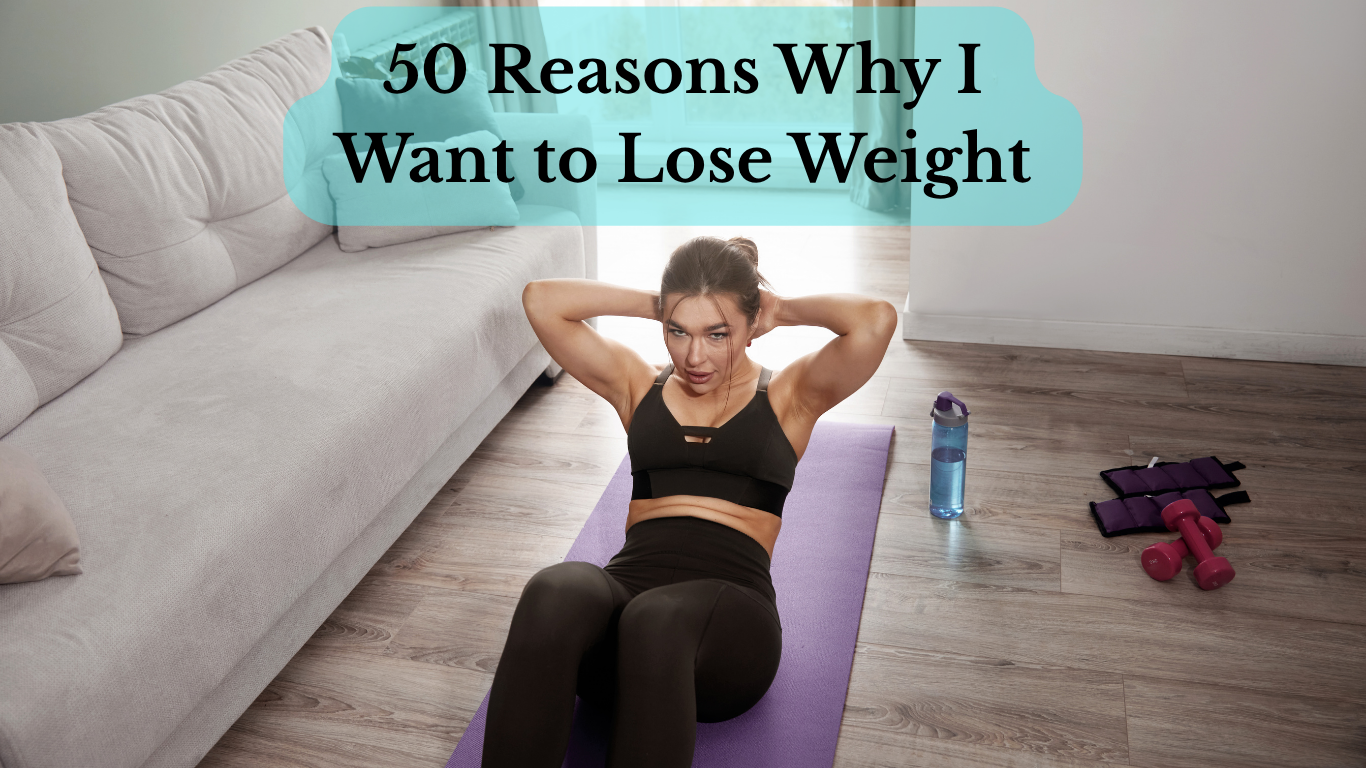
Have you ever found yourself standing at the intersection of genuine motivation and genuine uncertainty — knowing that you want to make a change but finding it difficult to articulate clearly and specifically exactly why the change matters to you? The reasons people want to lose weight are as individual as the people who want it — spanning the medical and the personal, the physical and the psychological, the immediately practical and the long-term aspirational — and the honest articulation of those reasons is one of the most consistently underestimated components of sustainable motivation. This blog presents 50 genuine reasons people want to lose weight — organised across health, energy, physical capability, emotional wellbeing, and daily life — offered as a mirror in which you might find your own reasons more clearly reflected.
Table of Contents
Health and Medical Reasons
1. To Reduce the Risk of Type 2 Diabetes
Per research on weight and metabolic health, excess body weight — particularly abdominal fat — is one of the strongest modifiable risk factors for type 2 diabetes. Even modest weight loss of 5 to 10% of body weight produces measurable improvements in insulin sensitivity and blood glucose regulation whose clinical significance is genuinely substantial.
2. To Lower Blood Pressure
Hypertension — elevated blood pressure — is directly associated with excess body weight through several well-documented mechanisms, including increased blood volume, elevated cardiac output, and the specific hormonal and inflammatory effects of excess adipose tissue. Per cardiovascular research, weight loss is one of the most effective non-pharmacological interventions for blood pressure reduction available.
3. To Improve Cardiovascular Health
Per research on weight and cardiovascular risk, excess body weight is associated with elevated risk of heart disease, stroke, and cardiovascular mortality through multiple mechanisms, including hypertension, dyslipidaemia, insulin resistance, and the chronic inflammation associated with excess adipose tissue. Weight loss that improves these risk factors directly reduces cardiovascular event risk.
4. To Reduce Joint Pain and Improve Mobility
Per orthopaedic research on weight and joint loading, each pound of body weight generates approximately four pounds of force across the knee joint during walking—meaning that even modest weight loss produces disproportionate reductions in the mechanical load that joints must manage. For people experiencing knee, hip, or ankle pain, weight loss is one of the most directly effective interventions available.
5. To Improve Sleep Quality and Reduce Sleep Apnoea
Obstructive sleep apnoea — the intermittent obstruction of the upper airway during sleep that produces the non-restorative sleep of fragmented, oxygen-disrupted nights — is strongly associated with excess weight, particularly excess neck and upper body adiposity. Per sleep medicine research, weight loss is the most effective intervention available for weight-related sleep apnoea, with significant improvements documented even with modest loss.
6. To Reduce Chronic Inflammation
Excess adipose tissue — particularly visceral fat — is metabolically active in ways that produce chronic low-grade systemic inflammation whose association with cardiovascular disease, cancer risk, cognitive decline, and numerous other chronic conditions is extensively documented. Weight loss reduces systemic inflammatory markers in ways that have genuine and broad clinical significance.
7. To Improve Cholesterol and Lipid Profiles
Per research on weight and lipid metabolism, excess weight is associated with elevated triglycerides, reduced HDL cholesterol, and the specific pattern of small, dense LDL particles whose cardiovascular risk is greater than the equivalent concentration of larger LDL particles. Weight loss consistently improves lipid profiles in ways that reduce cardiovascular risk independently of medication.
8. To Reduce Cancer Risk
Per cancer research and the evidence reviewed by organisations including the World Cancer Research Fund, excess body weight is a documented risk factor for multiple cancer types, including breast cancer post-menopause, colorectal cancer, endometrial cancer, oesophageal cancer, and several others. The mechanisms include hormonal effects, insulin resistance, and chronic inflammation — all of which are modified by weight loss.
9. To Manage or Reverse Fatty Liver Disease
Non-alcoholic fatty liver disease — the accumulation of excess fat in liver cells — affects a significant and growing proportion of the population and is directly associated with excess weight, particularly abdominal adiposity. Per hepatology research, weight loss is the most effective available intervention for NAFLD, with significant improvements in liver fat content documented with as little as 7 to 10% body weight loss.
10. To Improve Hormonal Balance
Excess adipose tissue influences the production, conversion, and signalling of multiple hormones — including oestrogen, testosterone, insulin, and leptin — in ways that produce hormonal imbalances with wide-ranging effects on energy, mood, reproductive health, and metabolic function. Weight loss improves hormonal profiles in ways that can have significant effects on the symptoms associated with these imbalances.
Energy, Vitality, and Daily Function
11. To Have More Energy Throughout the Day
The specific fatigue that excess weight produces — through its effects on sleep quality, cardiovascular efficiency, and the metabolic burden of carrying additional mass — is one of the most consistently reported motivations for weight loss and one whose improvement with weight loss is reliably experienced.
12. To Climb Stairs Without Becoming Breathless
The specific functional limitation of breathlessness on exertion — the stairs that require a pause, the walk that requires a stop, the physical effort whose demand exceeds the body’s comfortable capacity — is a practical, daily, genuinely limiting consequence of excess weight whose improvement motivates many people more powerfully than any abstract health statistic.
13. To Walk Longer Distances Comfortably
The restriction of comfortable walking range by excess weight and its associated cardiovascular and joint effects limits the spontaneous, unplanned physical activity that contributes significantly to both physical health and quality of life. The recovery of comfortable walking range is one of the most practically meaningful improvements that weight loss produces.
14. To Sleep More Restfully
Beyond the sleep apnoea dimension described above, weight loss is associated with improvements in sleep quality through multiple mechanisms — reduced physical discomfort during sleep, improved hormonal profiles that support healthy sleep architecture, and the improvement of the mood and anxiety that poor sleep perpetuates.
15. To Feel Less Overheated and Uncomfortable in Warm Weather
Excess insulating adipose tissue affects thermoregulation in ways that produce the specific discomfort of overheating in warm conditions, limiting outdoor activity, social participation, and simple physical comfort, which are genuine quality of life factors.
16. To Reduce Fatigue From Carrying Extra Weight
The metabolic and mechanical cost of carrying excess body mass is continuous and cumulative — the person carrying significant excess weight is performing a significant amount of additional work in every movement of every day. The specific relief of reduced load is one of the most immediately and viscerally experienced benefits of weight loss.
17. To Improve Exercise Tolerance and Recovery
Weight loss improves the ratio of cardiovascular and muscular capacity to the load those systems must move — producing improvements in exercise tolerance, endurance, and recovery that allow the progressive development of fitness in a virtuous cycle whose initiation is one of the most practically valuable benefits of early weight loss.
Physical Capability and Fitness
18. To Run, Play, and Keep Up With Children or Grandchildren
The specific physical capability of active play with children or grandchildren — the running, the chasing, and the physical engagement whose limitation by excess weight or poor fitness is experienced as a genuine and emotionally significant loss — is one of the most powerfully motivating reasons for weight loss in parents and grandparents.
19. To Participate in Physical Activities Previously Enjoyed
The return to activities – hiking, swimming, cycling, sport, and dancing – whose enjoyment was disrupted by weight gain and its associated limitations is one of the most genuinely positive framings of weight loss motivation available.
20. To Improve Athletic Performance
For people engaged in sport and physical training, weight loss that improves the power-to-weight ratio — increasing relative strength and endurance — is a direct performance enhancement whose specific numerical improvement is trackable and motivating.
21. To Reduce Physical Limitations During Travel
The specific physical limitations that excess weight produces during travel — aircraft seat comfort, walking distances in unfamiliar cities, the physical demands of tourism and outdoor exploration — restrict the quality and scope of travel experiences in ways that motivate many people.
22. To Make Physical Tasks Easier
Gardening, home maintenance, carrying groceries, managing physical demands of daily life – the ease and comfort of these ordinary physical tasks is directly affected by weight and fitness level in ways that are genuinely practical and genuinely motivating.
23. To Improve Flexibility and Reduce Physical Stiffness
Excess weight affects flexibility and physical comfort of movement in ways that physical activity and weight loss address – the restoration of a comfortable range of motion is a genuine and valued improvement in daily physical experience.
Mental Health and Emotional Wellbeing
24. To Improve Mood and Reduce Depression Symptoms
Per research on weight loss and psychological wellbeing, successful weight loss is associated with improvements in mood and reduction of depressive symptoms — through both the direct neurobiological effects of physical activity involved in weight loss and the improvements in self-efficacy, social functioning, and physical comfort that weight loss produces.
25. To Reduce Anxiety About Health
The specific anxiety produced by awareness of health risks associated with excess weight — the background worry about future health events whose presence reduces present quality of life — is addressed directly by the health improvements that weight loss produces.
26. To Feel More Confident in Social Situations
Body confidence — the comfort and ease with which one inhabits and presents one’s physical self in social contexts — is significantly affected for many people by their weight and their relationship with it. The specific improvement in social confidence that feeling better in one’s body produces is a genuine and valued psychological benefit.
27. To Improve Body Image and Self-Esteem
Per research on body image and psychological wellbeing, the relationship between body image and self-esteem is complex and not reducible to weight alone — but for people whose self-esteem is significantly affected by their weight and body image, the changes that weight loss produces in how they experience their own body can produce genuine and significant improvements in self-esteem.
28. To Feel More Comfortable in Your Own Skin
The specific psychological experience of comfort in one’s own body — the ease and familiarity with which one inhabits one’s physical self — is one of the most important dimensions of psychological well-being and one that many people connect directly to their relationship with their weight.
29. To Reduce Feelings of Physical Self-Consciousness
The self-consciousness that many people experience in physical contexts — swimming, exercising, wearing certain clothing, appearing in photographs — is a genuine limitation on the enjoyment of experiences whose reduction with improved body confidence is a valued and meaningful change.
30. To Feel More in Control of Health Choices
The experience of successfully managing weight — of making and sustaining the choices that produce the intended outcome — is itself a significant psychological benefit whose contribution to general self-efficacy extends well beyond the specific domain of weight management.
Clothing, Appearance, and Practical Daily Life
31. To Wear Clothing More Comfortably
The practical and psychological experience of clothing that fits well — that is chosen for preference rather than accommodation and that moves comfortably with the body rather than constraining or revealing in unwanted ways — is a genuine and valued daily experience whose improvement motivates many people.
32. To Shop in a Wider Range of Stores and Styles
The practical limitation on clothing choice that size imposes in the current retail environment — where the full range of styles, stores, and options is not available across all sizes — is a genuine frustration whose resolution with weight loss is a practically valued benefit.
33. To Feel More Comfortable in Hot Weather Clothing
The specific discomfort associated with the clothing choices of warm weather – the exposure, the brevity, the visibility – is a summer-specific motivation whose seasonal recurrence is a consistent reminder of a valued goal.
34. To Appear in Photographs Without Discomfort
The avoidance of photographs – and the specific distress of seeing oneself in photographs – is a common and genuinely limiting consequence of poor body image whose resolution allows full participation in the documented moments of life that photographs represent.
35. To Fit More Comfortably in Public Seating
The specific discomfort of public seating — aircraft seats, restaurant booths, cinema seats, and public transport — whose dimensions may be inadequate for larger bodies, is a practical and dignity-related motivation whose relevance is genuinely felt by many people.
36. To Feel More Comfortable During Physical Intimacy
Physical self-consciousness during intimacy — the specific inhibition that poor body image produces in the context of the physical vulnerability that intimacy requires — is a genuine and meaningful motivation whose resolution with improved body confidence produces genuine improvements in intimate relationship quality.
Relationships and Social Life
37. To Feel More Energetic in Relationships
The specific energy required for active social and relational engagement — the activities, the spontaneity, the physical participation in social life — is affected by excess weight and its associated fatigue in ways that motivate many people who value their relational engagement.
38. To Set a Healthy Example for Children or Family Members
The modelling of healthy lifestyle choices — including the specific habits of nutrition and physical activity that support healthy weight — is a powerful motivational context for parents and caregivers whose influence on the next generation’s health habits is significant and directly felt.
39. To Participate More Fully in Social Activities
The limitation of social participation by physical self-consciousness, energy constraints, or the specific physical demands of certain social activities is a genuine social cost of excess weight whose resolution with weight loss allows fuller social engagement.
40. To Improve Romantic Confidence
The specific confidence that comes from feeling good in one’s body — the ease and openness to romantic engagement that body confidence supports — is a genuine and valued motivation for many people whose current body image affects their romantic confidence.
Long-Term Goals and Future Planning
41. To Reduce the Risk of Future Mobility Problems
Per research on weight, ageing, and mobility, the long-term trajectory of joint health, muscular capacity, and physical independence in later life is significantly influenced by current weight and physical activity levels. The prevention of future mobility problems is a genuinely farsighted and genuinely important motivation.
42. To Be Physically Capable Longer Into Life
The relationship between current weight and the trajectory of physical capability across the lifespan is well-documented — the people who maintain healthy weight and physical fitness maintain independent physical function significantly longer than those who do not.
43. To Reduce the Risk of Requiring Care in Later Life
Per research on weight, chronic disease, and care dependence in later life, the multiple chronic conditions associated with excess weight are among the primary drivers of care dependence in older adulthood. Weight loss that reduces these disease risks directly reduces the probability of future care dependence.
44. To Achieve a Specific Health Milestone
The concrete, specific, personally meaningful health milestone — a target weight, a fitness achievement, a medical marker — is one of the most practically effective motivational frameworks for weight loss because of its specificity and its measurability.
45. To Support a Planned Surgical Procedure
Weight loss is frequently recommended or required before specific surgical procedures — including orthopaedic surgery, bariatric surgery, and various elective procedures — whose outcomes are improved and whose risks are reduced by the patient’s weight management. This medically specific motivation is among the most concrete and time-bounded available.
Personal Achievement and Self-Development
46. To Prove to Yourself That You Can
The specific motivational value of completing a genuinely difficult goal — demonstrating to oneself that the intention can be sustained, the difficulty navigated, and the outcome achieved — is one of the most internally satisfying reasons for pursuing weight loss and one whose value extends beyond the weight loss itself into general self-efficacy.
47. To Feel Physically Strong and Capable
The experience of a body that is strong, capable, and responsive — that can do what it is asked to do with ease and competence — is a specific and valued physical experience whose positive relationship with weight and fitness motivates many people.
48. To Complete a Physical Challenge
The specific goal of a physical challenge — a 5K, a charity walk, a hiking trip, or a cycling event — whose completion requires the fitness and weight management that preparation involves, is one of the most effective goal-setting frameworks for sustained weight management motivation.
49. To Feel Like the Best Version of Yourself
The holistic aspiration of inhabiting the fullest, most capable, most energetic, most comfortable version of oneself — whose physical dimension is one component of a broader sense of genuine flourishing — is one of the most meaningful and most sustaining framings of weight loss motivation available.
50. Because You Deserve to Feel Well
The fiftieth and most fundamental reason — the honest acknowledgement that the desire to feel better in one’s body, to have more energy, to move more freely, to sleep more soundly, and to inhabit one’s physical life with more ease and more comfort — is not vanity, not superficiality, and not anything other than the entirely legitimate and entirely honourable wish to take care of the one body and the one life that you have been given.
Key Takeaways
The fifty reasons in this blog — spanning medical health, daily energy, physical capability, mental and emotional wellbeing, practical daily life, relationships, long-term planning, and personal achievement — together represent the genuine diversity of reasons that motivate people to pursue weight loss.
The most sustainable weight loss motivation is almost always personal rather than generic — the reason that is genuinely yours and that connects to what genuinely matters in your specific life is the reason most likely to sustain the choices whose consistency produces the outcome.
Per the consistent finding of behaviour change research, the motivation that is most effective is not the most impressive or the most medically correct — it is the one that is most genuinely, most specifically, and most honestly connected to the actual life of the person it is supposed to move. Find your reasons in this list or beyond it. Write them down. Return to them on the days when the motivation is harder to access. And pursue the goal in the way that is most likely to produce genuine, sustainable, health-supporting change — which almost always means gradually, consistently, and with the support of qualified guidance.
You do not need fifty reasons. You need one that is genuinely yours. Find it. Hold onto it. Let it carry you forward on the days when the goal feels far away.