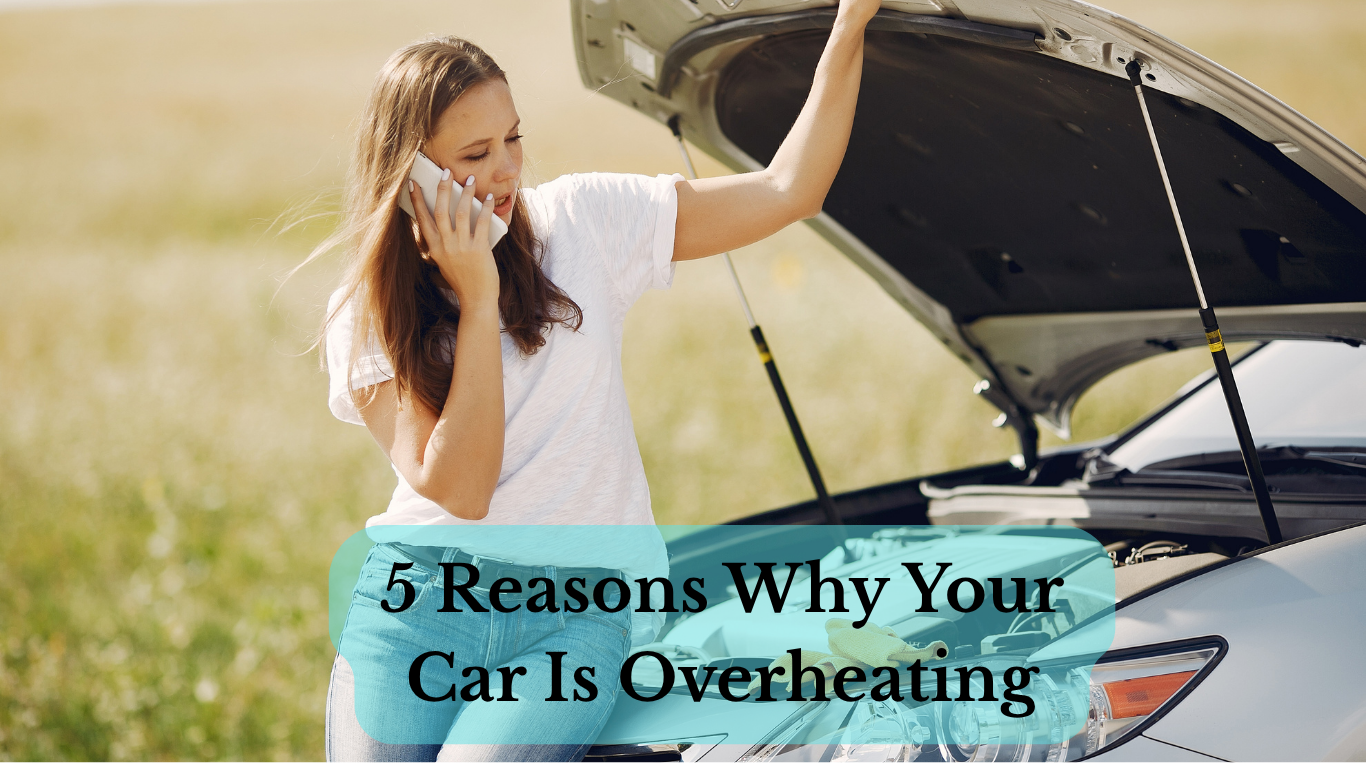
Have you ever glanced at your dashboard temperature gauge and noticed it climbing toward the red zone — or seen the specific alarm of a warning light indicating that your engine temperature has exceeded safe operating limits — and felt the specific combination of automotive anxiety and practical uncertainty that comes from knowing something is wrong but not knowing what it is or how serious it is? Engine overheating is one of the most potentially serious mechanical problems a driver can encounter — serious because the consequences of ignoring it, or of attempting to continue driving with an overheating engine, range from costly repair to complete engine destruction — and yet it is also one of the most consistently mishandled roadside situations precisely because drivers lack the specific knowledge that would allow them to respond appropriately. This blog examines 5 of the most common reasons car engines overheat — what causes each, what the symptoms look like, and what the appropriate response is in each case.
Table of Contents
The Essential Context — What Engine Overheating Actually Means and Why It Is Serious
Before examining the five causes, the honest establishment of what engine overheating represents — and why responding to it promptly is genuinely important — provides the context for understanding why each cause deserves serious attention.
Modern petrol and diesel engines are designed to operate within a specific temperature range — typically between approximately 82 and 104 degrees Celsius — whose maintenance depends on the cooling system functioning correctly. When engine temperature rises above this range, the specific consequences include the thermal expansion of metal components beyond their design tolerances, the breakdown of engine oil whose lubricating properties are temperature-sensitive, the potential warping of the cylinder head — one of the most expensive single repair items on a modern engine — the failure of head gaskets whose sealing function is temperature-sensitive, and, in extreme cases, the seizure of engine components whose thermal expansion has eliminated the operating clearances that allow them to move.
Per automotive engineering research on engine thermal management, the damage produced by a single significant overheating event can be both severe and costly — cylinder head warping that requires machining or replacement; head gasket failure that allows coolant into the oil system or combustion chamber; and the bearing damage whose consequence is a major engine rebuild or replacement. The engine that is allowed to overheat significantly, or that is driven while overheating, can sustain damage whose repair cost exceeds the vehicle’s value.
The appropriate immediate response to any overheating indication is to pull over safely as soon as possible, turn off the engine, and allow the system to cool before investigating — not to continue driving in the hope that the temperature will drop, and not to open the cooling system before it has cooled to safe temperatures.
1. Low or Depleted Coolant Level
The first and most common cause of engine overheating is the simplest — insufficient coolant in the cooling system to carry heat away from the engine at the rate the operating conditions require.
What causes low coolant:
Coolant levels can become insufficient for several distinct reasons whose identification is important for appropriate repair. External coolant leaks — from hoses, the radiator, the water pump, or hose connections — are the most common cause of low coolant, and their presence is typically indicated by visible coolant puddles under the vehicle; the smell of coolant — sweet and slightly chemical — from the engine bay; and, in some cases, steam from the engine bay during or after operation.
Internal coolant leaks — most commonly from a failed head gasket — allow coolant to enter the combustion chamber, where it is burnt, or the oil system, where it produces the specific symptom of white or grey smoke from the exhaust and the milky, emulsified appearance of the engine oil on the dipstick. Internal leaks are more serious than external ones because they represent a failure of a major engine component rather than a hose or seal replacement.
Coolant that is old and has not been changed at the recommended service interval gradually loses its anti-corrosion and antifreeze additives, becoming increasingly acidic and corrosive — which accelerates the deterioration of cooling system components and can produce leaks through the progressive corrosion of radiator tubes, hose connections, and the water pump housing.
What the symptoms look like:
Low coolant typically produces a gradual rise in engine temperature rather than a sudden spike — the temperature gauge climbs toward the red zone during driving, may partially recover at idle when the car’s forward motion no longer assists cooling, and returns to normal if the vehicle is stopped and the engine cools.
What to do:
If the coolant level is low and no leak is visible, topping up with the correct coolant specification for your vehicle — which is specified in the owner’s manual and which varies between vehicles — will address the immediate problem while the underlying cause of the low level is investigated. If a leak is visible or suspected, the cause requires identification and repair by a qualified mechanic before the vehicle is returned to normal use.
2. Faulty Thermostat
The second common cause of engine overheating is a failed thermostat — the temperature-sensitive valve in the cooling system whose function is to regulate coolant flow between the engine and the radiator, keeping the engine at its optimal operating temperature by restricting coolant flow when the engine is cold and allowing full circulation when operating temperature is reached.
How the thermostat works and how it fails:
The thermostat is a wax-filled valve that opens and closes in response to coolant temperature — it remains closed when the engine is cold, directing coolant through a bypass circuit that keeps it within the engine and allowing faster warm-up, and opens at a calibrated temperature — typically between 82 and 92 degrees Celsius, depending on the engine — to allow hot coolant to flow to the radiator for cooling.
Thermostats fail in two distinct modes whose consequences differ significantly. A thermostat that fails in the closed position — the more dangerous failure mode — prevents coolant from reaching the radiator regardless of engine temperature, causing the engine to overheat rapidly and significantly as the trapped coolant absorbs heat without the opportunity for radiator cooling. A thermostat that fails in the open position allows continuous coolant circulation between the engine and radiator, preventing the engine from reaching normal operating temperature and reducing fuel efficiency and performance, but not causing overheating.
What the symptoms look like:
A stuck-closed thermostat produces rapid, significant overheating — the temperature gauge rises sharply shortly after the engine has warmed up, with no levelling off at normal operating temperature. The absence of heat from the cabin heater — which uses engine heat to warm air — despite the engine overheating is an additional indicator of thermostat failure, because the closed thermostat restricts the coolant flow that provides heater heat.
What to do:
Thermostat replacement is a relatively accessible and moderately priced repair – the component itself is inexpensive and the labour involved is manageable in most vehicles. Per automotive maintenance guidance, thermostat replacement is worth considering as a preventative measure at higher mileage or if the thermostat’s age is unknown, since the component’s failure mode — stuck closed — produces consequences whose severity justifies prophylactic replacement.
3. Water Pump Failure
The third cause of engine overheating is water pump failure — the failure of the mechanical pump whose function is to circulate coolant through the cooling system at the rate required to maintain engine temperature within safe operating limits.
How the water pump works and how it fails:
The water pump is typically driven by the engine’s drive belt or timing belt and circulates coolant from the radiator through the engine block and cylinder head, where it absorbs heat, and back to the radiator, where the heat is dissipated. The pump contains an impeller — a vaned wheel that imparts kinetic energy to the coolant — and is sealed against the engine by a mechanical seal and bearing assembly whose service life is finite.
Water pump failures occur through several mechanisms. Bearing failure produces the specific symptom of a grinding or whirring noise from the front of the engine that varies with engine speed and, in advanced stages, allows the pump shaft to wobble, compromising the mechanical seal and producing coolant leakage at the pump shaft. Impeller failure — whose most common form in modern vehicles is the erosion or separation of plastic impellers — allows the pump to rotate without effectively moving coolant, producing overheating without the noise associated with bearing failure. Seal failure produces coolant leakage at the pump without the noise of bearing failure.
What the symptoms look like:
Water pump failure typically produces gradual overheating that worsens with higher engine loads and speeds — the failing pump that can barely maintain adequate flow at idle may produce acceptable temperatures at low engine speeds but significant overheating under the higher thermal loads of motorway driving or hill climbing. Coolant leakage at the pump face and the grinding noise of bearing failure are additional diagnostic indicators.
What to do:
Water pump replacement is a moderately significant repair whose cost is substantially reduced when performed at the same time as the timing belt replacement that many engines require at specified intervals — because accessing the water pump in timing belt-driven systems requires the same disassembly as timing belt replacement, and the marginal additional cost of pump replacement at the same time is small relative to the labour cost of a separate pump replacement visit.
4. Radiator Problems — Blockage, Damage, or Fan Failure
The fourth cause of engine overheating is the failure of the radiator system to dissipate heat from the coolant at the rate required — through blockage of the radiator’s internal passages, physical damage to the radiator, or failure of the cooling fan that is critical for radiator effectiveness at low vehicle speeds.
How radiator problems develop:
Radiator blockage develops through the accumulation of scale, corrosion products, and the degradation products of old coolant within the radiator’s internal passages — a process that is accelerated by the use of incorrect coolant, infrequent coolant changes, and the introduction of tap water rather than distilled water into the cooling system. Blocked radiator passages reduce the surface area available for heat exchange and increase the resistance to coolant flow, reducing the cooling system’s capacity to dissipate heat at the rate the engine generates it.
Physical radiator damage — from stone impacts, animal strikes, or collision damage — can produce both external coolant leakage and the collapse of the thin-walled tubes that form the radiator’s heat exchange surface, reducing cooling capacity in ways that may not be immediately visible from external inspection.
Cooling fan failure is particularly significant in modern vehicles whose electric cooling fans are critical for maintaining adequate airflow through the radiator at low vehicle speeds — during slow traffic, at idle, and during parking manoeuvres when the vehicle’s forward motion does not produce the ram airflow that cools the radiator at speed. The vehicle that overheats in slow traffic or at idle but maintains normal temperature at motorway speeds has a cooling fan failure profile consistent with fan motor failure, a failed fan relay, or a broken fan blade.
What the symptoms look like:
Radiator blockage typically produces gradual overheating that worsens with engine load and ambient temperature. Fan failure produces the specific pattern of overheating at low speeds and idle that resolves at higher road speeds — the temperature gauge that climbs in traffic but returns to normal on the motorway is the classic fan-failure presentation.
What to do:
Radiator flushing — the systematic removal of accumulated scale and corrosion products from the cooling system — is a maintenance procedure whose regular performance at manufacturer-recommended intervals prevents the progressive blockage that reduces cooling capacity. Fan failure diagnosis requires identification of the specific failed component — motor, relay, temperature sensor, or wiring — and is generally a straightforward repair.
5. Head Gasket Failure
The fifth cause of engine overheating — and the most serious on this list — is head gasket failure, the breach of the seal between the engine block and cylinder head that can both cause and result from overheating and whose consequences for engine integrity are significant enough to warrant particular attention.
What the head gasket does and how it fails:
The head gasket is the seal between the engine block — the lower portion of the engine containing the cylinders and crankshaft — and the cylinder head — the upper portion containing the valves, camshaft, and combustion chamber roofs. It must simultaneously seal the combustion chambers against high-pressure combustion gases, the oil passages that lubricate the cylinder head components, and the coolant passages that carry coolant through the head for temperature management.
Head gasket failure most commonly occurs at the boundary between the combustion chamber and coolant passage — allowing high-pressure combustion gases to enter the coolant system or coolant to enter the combustion chamber. Gas entry into the coolant produces the specific symptom of bubbling in the coolant reservoir, whose characteristic appearance of continuous bubbling at idle — from combustion gases pressurising the cooling system — is a reliable diagnostic indicator. Coolant entry into the combustion chamber produces the characteristic white smoke from the exhaust that results from burning coolant — a symptom whose persistence rather than temporary appearance on cold mornings distinguishes head gasket failure from normal condensation.
The relationship between head gasket failure and overheating is bidirectional — a failed head gasket can cause overheating by compromising cooling system pressure and function, and overheating can cause head gasket failure by producing the thermal distortion of the cylinder head that breaches the gasket seal. This bidirectionality makes the identification and repair of overheating causes before gasket failure occurs particularly important — the overheating engine that is allowed to run hot repeatedly is the engine most likely to develop the head gasket failure whose repair is substantially more expensive than the cooling system repair that would have prevented it.
What the symptoms look like:
Head gasket failure produces a combination of symptoms that, taken together, are diagnostic — coolant loss without external leak, white exhaust smoke, coolant bubbling in the reservoir, possible oil contamination with the milky emulsified appearance of coolant-contaminated oil on the dipstick, and, in more severe cases, the loss of engine power associated with the compression loss of the breached combustion chamber seal.
What to do:
Head gasket repair is a significant engine repair whose cost reflects the labour intensity of cylinder head removal, the cost of gasket replacement and associated components, and the potential additional cost of cylinder head resurfacing if the overheating that caused the failure has produced thermal warping. Per automotive repair guidance, the accurate diagnosis of head gasket failure before attempting other cooling system repairs is important — the cooling system that has suffered head gasket failure will not hold pressure or coolant regardless of how many other components are replaced, and the accurate identification of the failure avoids the frustration and additional cost of treating symptoms rather than the cause.
What to Do When Your Car Overheats — A Practical Response Guide
Having examined the five most common causes, the practical response to an overheating engine deserves direct guidance — because the specific actions taken in the first minutes of an overheating event significantly affect both the safety of the driver and the extent of the mechanical damage that results.
Immediate response:
When the temperature gauge enters the red zone or an overheating warning light activates, the immediate priority is to reduce engine load — turn off the air conditioning, which places significant demand on the engine, and if safe to do so, turn the cabin heater to maximum heat, which transfers heat from the coolant to the cabin air and can provide a few minutes of additional protection. Pull over safely as soon as possible – not at the next motorway service area thirty miles away, but as soon as a safe stopping place is available.
Turn off the engine and allow it to cool for a minimum of 30 minutes before opening the bonnet or investigating. Do not open the radiator cap under any circumstances until the engine has cooled completely — the pressurised coolant in a hot cooling system can cause severe burns when released.
After cooling:
Once the engine has cooled completely, check the coolant level in the reservoir and inspect visually for any obvious external leaks. If the coolant level is low and no leak is visible, topping up and monitoring temperature on a short test drive may allow assessment of whether the problem recurs. If a leak is visible, if the engine produced white exhaust smoke, if the coolant appears milky or contaminated with oil, or if overheating recurs on the short test drive, the vehicle requires professional mechanical assessment before further use.
Key Takeaways
The five causes examined in this blog — low coolant level, thermostat failure, water pump failure, radiator and cooling fan problems, and head gasket failure — together represent the majority of engine overheating causes encountered in routine vehicle ownership. Their honest understanding allows the vehicle owner to respond appropriately to overheating indications, to communicate accurately with the mechanic who diagnoses and repairs the specific cause, and to maintain the cooling system in the condition that prevents overheating from occurring in the first place.
Per automotive maintenance research, the cooling system maintenance practices that most reliably prevent overheating — regular coolant changes at manufacturer-recommended intervals, the use of the correct coolant specification, the monitoring of coolant level between services, and the prompt investigation of any temperature gauge anomaly — are among the most cost-effective maintenance investments available in vehicle ownership, because the cooling system repair that is caught early is invariably less costly than the engine damage that deferred repair produces.
Watch the temperature gauge. Respond promptly to any overheating indication. Pull over safely and allow cooling before investigating. And address whatever the investigation reveals before returning the vehicle to normal use — the engine that is protected from overheating is the engine most likely to serve reliably for the full extent of its potential service life.