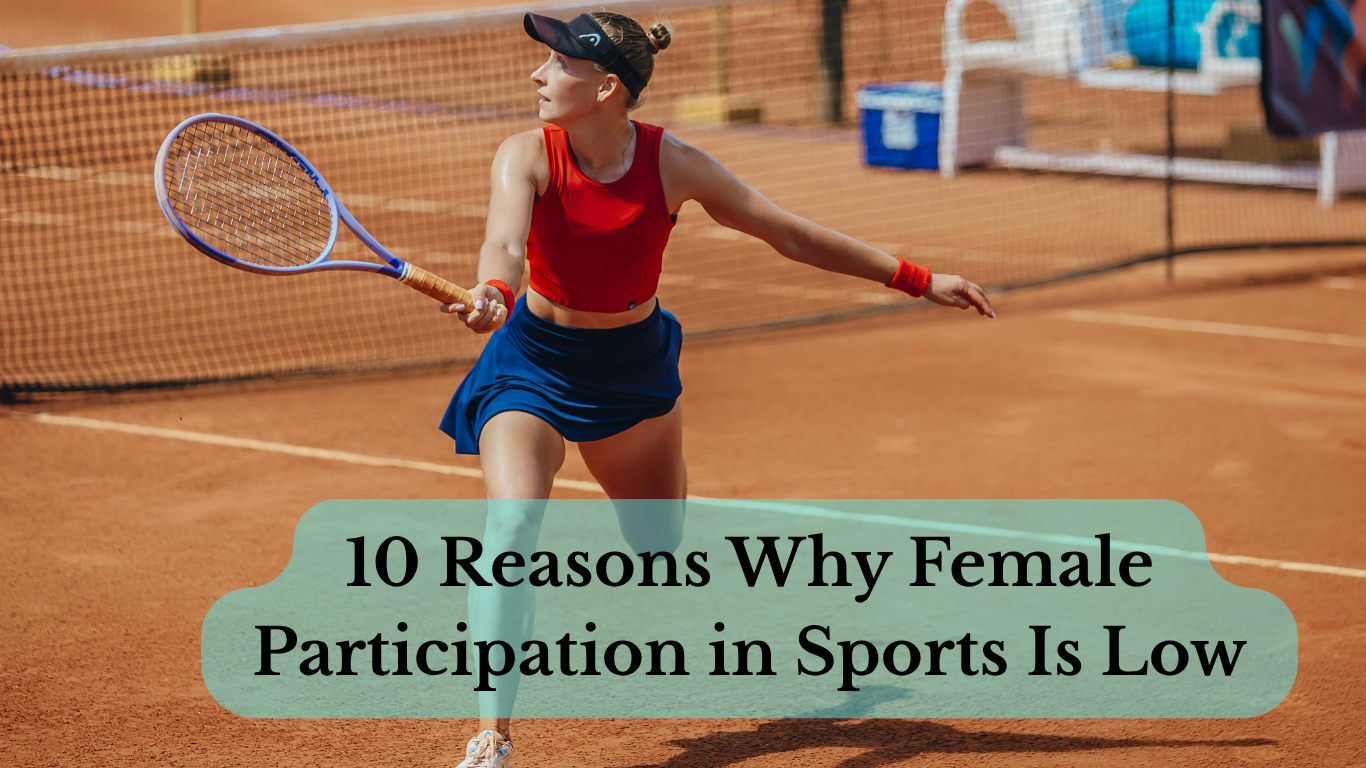
Have you ever looked at the participation numbers for organised sport — at any level, from school playgrounds through recreational leagues to elite competition — and noticed the persistent gender gap that exists despite decades of policy initiatives, awareness campaigns, and genuine cultural change aimed at closing it? Female participation in sport remains measurably lower than male participation across most countries, age groups, and levels of competition, and the reasons behind this gap are genuinely complex — spanning the social, the structural, the economic, and the psychological in ways that no single explanation adequately captures. This blog examines 10 evidence-informed reasons why female sports participation remains lower than male participation — presented with the honest complexity the subject deserves and the genuine acknowledgement that these factors interact rather than operate independently.
Table of Contents
1. Drop-Off During Adolescence Is Significantly Higher for Girls
The first and most extensively documented reason is the specific pattern of adolescent drop-off — girls leave organised sport at substantially higher rates than boys during the teenage years, a pattern documented consistently across multiple countries and decades of research.
Per research from the Women’s Sport Foundation and similar organisations internationally, girls drop out of sport at roughly twice the rate of boys by age 14, with the steepest decline occurring during the transition from late childhood to early adolescence. The reasons cited by girls themselves in qualitative research include body image concerns that intensify during puberty, the increased visibility and self-consciousness associated with physical activity during a period of significant bodily change, competing academic and social pressures, and the specific social cost of being seen as athletic in environments where femininity and athleticism are perceived as in tension.
This adolescent drop-off is significant because it does not merely reduce teenage participation — it removes a substantial proportion of the pipeline of girls who might otherwise have continued into adult recreational and competitive sport, with effects that compound across the life course.
2. Historical and Ongoing Disparities in Funding and Resources
The second reason is the documented and persistent disparity in the funding, facilities, and resources allocated to women’s and girls’ sport compared to men’s and boys’ sport at virtually every level from school programmes to professional leagues.
Per research on sports funding equity, despite legal frameworks in many countries — including Title IX in the United States — mandating equitable resource allocation, disparities persist in practice through mechanisms including unequal facility access and scheduling, disparities in coaching quality and compensation, lower marketing and media investment in women’s competitions, and disparities in scholarship availability at the collegiate level in some sports and contexts. These resource disparities affect both the quality of experience available to participating girls and women and the visibility of women’s sport as an aspirational pathway for younger girls considering whether to pursue it.
The professional and elite-level disparities matter beyond their direct effects — per research on role modelling and sport participation, the visibility and perceived viability of professional pathways for women in a given sport are associated with grassroots participation rates among girls, meaning that disparities at the elite level have documented downstream effects on participation at the youth level.
3. Sociocultural Norms About Femininity and Athleticism
The third reason is the persistent, though declining, cultural association between athleticism and masculinity in many societies — and the corresponding tension this creates for girls and women whose participation in sport, particularly contact or strength-based sports, can be perceived as conflicting with prevailing norms of femininity.
Per sociological research on gender and sport, the specific framing of certain sports and certain physical qualities — visible muscularity, aggression, and physical dominance — as masculine produces a genuine social cost for girls and women who pursue them, including documented experiences of being labelled as insufficiently feminine, facing questions about sexual orientation based on athletic participation, and navigating family or peer disapproval. This cost varies considerably by sport — sports historically coded as feminine, including gymnastics, dance-adjacent disciplines, and some forms of swimming, show smaller gender participation gaps than sports coded as masculine, including rugby, American football, and boxing.
The honest qualification is that these norms are genuinely shifting, with measurable generational change in attitudes and substantial growth in women’s participation in historically male-coded sports over recent decades — but the residual effect of these norms remains a documented factor in current participation patterns.
4. Limited Media Coverage and Visible Role Models
The fourth reason is the persistent disparity in media coverage of women’s sport relative to men’s sport — a disparity whose effects on participation operate through the reduced visibility of role models and the reduced cultural signal that women’s sport is valued and worth pursuing.
Per research on sports media coverage, women’s sport receives a substantially smaller proportion of total sports media coverage than its participation numbers would proportionally suggest — with some analyses finding coverage in the low single-digit percentages of total sports media airtime in some countries and periods, despite some recent improvement around major events. This coverage gap matters for participation because visible, successful role models are consistently identified in developmental psychology research as significant factors in young people’s decisions about which activities to pursue and persist in — the girl who rarely sees women’s sport covered with the same prominence as men’s sport receives an implicit cultural message about its relative value and viability as a pursuit.
5. Safety Concerns and Practical Barriers to Access
The fifth reason addresses the practical and safety-related barriers that can disproportionately affect girls’ and women’s sport participation, particularly in specific contexts and regions.
Per research on barriers to physical activity, safety concerns about travelling to and from sports facilities, particularly for outdoor or evening activities, are reported more frequently by girls and women than boys and men in many contexts — affecting willingness to participate in activities requiring travel through unsafe areas or participation at times when safety concerns are heightened. Additionally, practical barriers including the availability of appropriate facilities (changing rooms, equipment sized and designed for women, transportation), childcare responsibilities that disproportionately fall on women and limit time available for sport, and in some cultural and religious contexts, specific modesty requirements that affect the availability of appropriate sporting attire and mixed-gender facility use, all contribute to access barriers that are not equally distributed by gender.
6. Body Image Concerns and Self-Consciousness About Physical Performance
The sixth reason is the documented relationship between body image concerns — which research consistently shows affect girls and women at higher rates than boys and men — and willingness to participate in physical activity in visible, evaluative contexts.
Per research on body image and physical activity, girls and women report higher rates of self-consciousness about their bodies during physical activity, particularly in contexts involving tight or revealing sportswear, mixed-gender observation, or activities that draw attention to physical exertion and appearance (sweating, breathing heavily, visible effort). This self-consciousness is associated with reduced participation and earlier dropout, particularly during adolescence when body image concerns and self-consciousness about physical appearance typically intensify. The specific design of some sports uniforms — historically created without significant input from female athletes about comfort and coverage preferences — has been identified in some research and athlete advocacy as a contributing barrier, with several sports federations having revised uniform requirements in response to athlete feedback in recent years.
7. Lower Rates of Encouragement From Parents, Teachers, and Coaches
The seventh reason is the documented disparity in the encouragement that girls receive toward sport participation compared to boys, from the specific adults most influential in shaping early participation decisions.
Per research on parental and educator influence on youth sport participation, parents and teachers have historically been documented to encourage boys toward competitive and physical activity more consistently than girls, while encouraging girls toward activities perceived as more compatible with traditional femininity. This differential encouragement begins very early — research on early childhood finds differences in the type of physical play encouraged in boys versus girls from toddlerhood — and compounds over years of development, producing differences in confidence, skill development, and self-perceived athletic competence by the time children reach the age where they make more independent decisions about activity participation.
Coaching availability and quality specifically for girls’ teams has also been documented as lower in some contexts, with fewer qualified coaches available for girls’ programmes and, in some research, less rigorous or less developmentally appropriate coaching provided even where programmes exist.
8. The Compounding Effect of the Motherhood and Caregiving Transition
The eighth reason addresses the specific life-course pattern of women’s sport and physical activity participation declining significantly during the years of intensive caregiving for young children — a pattern less pronounced among men in most studied populations.
Per research on physical activity across the life course, women’s sport and exercise participation shows a measurable decline during the years immediately following childbirth and during the early childcare years, reflecting both the practical time constraints of primary caregiving responsibilities – which continue to fall disproportionately on women in most studied populations – and broader social norms about whose time and personal pursuits are prioritised during this life stage. While participation can and does recover for many women in later life stages, the disruption during these years represents a measurable and gendered pattern in lifetime sport participation trajectories.
9. Fewer Competitive and Recreational League Opportunities in Some Sports and Regions
The ninth reason is the straightforward structural reality that, in many sports and many regions, there are simply fewer organised opportunities — leagues, teams, and clubs — available for girls and women than for boys and men, particularly outside major urban centres.
Per research on sports infrastructure, the historical development of organised sport — built initially around male participation in many countries — has produced an infrastructure of clubs, leagues, and facilities whose expansion to include equivalent women’s and girls’ opportunities has been gradual and remains incomplete in many sports and regions. This is particularly pronounced in team sports requiring substantial infrastructure (full leagues and multiple teams for meaningful competition) compared to individual sports and in rural or smaller communities where the population base may not yet support separate, fully developed programmes for both genders in every sport.
This structural gap means that interested girls and women in some locations and some sports face a genuine practical barrier of limited or no available organised opportunity, independent of their interest or ability – a barrier that does not require any individual discouragement to operate, simply the absence of an accessible programme to join.
10. The Specific Pressures of Balancing Multiple Social Expectations
The tenth reason addresses the documented phenomenon of girls and women navigating a more complex and sometimes contradictory set of social expectations regarding appearance, behaviour, academic performance, and social relationships, which collectively reduce the time, energy, and social permission available for sustained sport participation compared to boys and men facing a comparatively narrower set of competing expectations in many cultural contexts.
Per research on adolescent girls’ time use and social expectations, girls report managing a broader range of social and appearance-related expectations during adolescence than boys report on average, alongside comparable or higher academic pressures in many contexts — producing genuine competition for the time and psychological bandwidth that sustained sport participation, particularly at competitive levels, requires. This is not a claim that girls face uniformly greater pressure than boys in every domain, but rather that the specific combination of expectations many girls navigate creates a context in which sport participation competes with a wider range of other prioritised demands.
The Honest Complexity — These Factors Interact
Having examined ten distinct reasons, the most important honest qualification is that these factors do not operate independently — they compound and interact in ways that make the overall gender gap in sports participation considerably more entrenched than any single factor would produce alone.
The girl who experiences body image self-consciousness during adolescence (#6) is also more likely to lack visible role models in media (#4), more likely to have received less athletic encouragement throughout childhood (#7), and more likely to be navigating competing social pressures (#10) — and each of these factors reinforces the others. This compounding is precisely why initiatives addressing only one dimension (funding alone, or media coverage alone, or coaching alone) have historically produced more limited change than comprehensive approaches addressing multiple factors simultaneously.
Per research on successful participation interventions, the programmes and policy changes that have produced the most measurable improvement in female sports participation are generally those that address multiple factors in combination: improved facilities and funding alongside increased visible role modelling, alongside coach training specific to girls’ developmental needs, alongside deliberate culture change around femininity and athleticism.
Key Takeaways
The ten reasons examined in this blog — adolescent drop-off, funding and resource disparities, sociocultural norms about femininity, limited media coverage, safety and access barriers, body image concerns, differential encouragement from influential adults, the motherhood and caregiving transition, structural gaps in available programmes, and the compounding pressure of multiple social expectations — together represent the genuine, multi-dimensional explanation for persistent gender gaps in sports participation.
Per the consistent finding of sports sociology and public health research, no single intervention adequately addresses a gap produced by this many interacting factors — and the most effective responses have been the comprehensive ones that address structural, cultural, and individual dimensions simultaneously rather than treating the gap as a single-cause problem with a single-lever solution.
The gap is real, well-documented, and consequential—for the individual girls and women whose participation and its benefits are reduced and for the broader culture whose full range of athletic talent and contribution remains incompletely realised. Understanding its genuine complexity is the necessary foundation for the kind of comprehensive response that closing it actually requires.