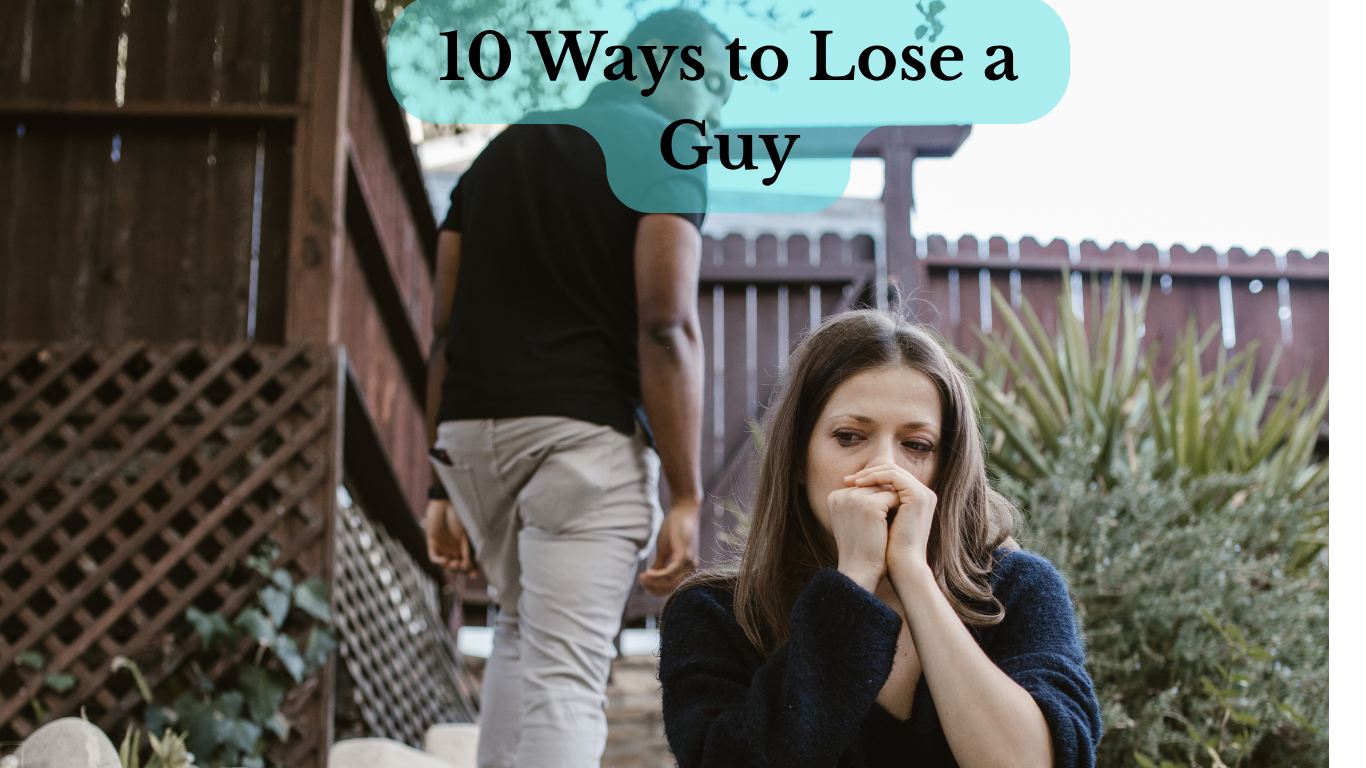
Have you ever found yourself in the early stages of what seemed like a genuinely promising connection — the texts flowing easily, the first date exceeding expectations, the sense that something might actually be developing here — and then watched it inexplicably stall, cool, and quietly disappear in ways you could not entirely account for? Or alternatively, have you found yourself on the other end of that equation, in a relationship that is genuinely not serving you and with no clear idea of how to bring it to an honest, dignified close? This blog takes both of these experiences seriously — examining the behaviours that most reliably end a dating connection that could have continued and the honest, respectful strategies for ending one that should not. Part cautionary guide, part exit strategy, and entirely in the spirit of helping people navigate the genuinely complicated terrain of early romantic connection with both self-awareness and integrity.
Table of Contents
The Unintentional Ways: Patterns That End Connections You Might Have Wanted to Continue
1. Making the Relationship the Relationship Before There Is a Relationship
The most consistently cited early-dating connection ender — identified in research on dating psychology and in virtually every honest conversation about what derails promising early connections — is the premature intensity of treating a connection as though it has already become something more established and more committed than it actually is.
This pattern appears in multiple forms. The heavy future-orientation of early conversations — “Where do you see this going?” and “What are you looking for long-term?” — before enough has been established to make the answers meaningful. The rapid escalation of contact frequency and emotional disclosure that signals an investment level disproportionate to the connection’s actual stage. The specific anxiety about commitment and exclusivity that surfaces before the other person has had enough time with you to have developed the level of investment that makes those conversations natural rather than pressuring.
Per psychological research on attachment and early dating, the specific dynamic this pattern creates is the experience of relational pressure in a context where the other person was hoping for the gradual, mutual building of connection at a pace that reflected genuine developing feeling rather than front-loaded intensity. The connection that could have grown into a genuine relationship is ended by the anticipation of commitment before the foundation for that commitment has been built.
The honest self-reflection this observation invites is not the suppression of genuine feeling but the calibration of expression to the actual stage of the connection — the recognition that the strength of early feeling is not always a reliable guide to how quickly that feeling should be expressed or acted upon.
2. Performing Rather Than Presenting
The second pattern that most reliably ends promising early connections is the specific inauthenticity of performance — the presentation of a carefully managed, strategically optimised, maximally impressive version of oneself that is engaging precisely because it is not real and that therefore builds a connection with a person who does not quite exist.
Performance in early dating takes many forms. The exaggeration of interests and experiences to align with the other person’s apparent values. The suppression of genuine opinions and preferences in favour of agreeable reflection of theirs. The deployment of the impressive highlight reel at the expense of the ordinary, imperfect reality that any sustained relationship will eventually require. And the specific exhaustion of maintaining the performance — which either collapses under its own unsustainability or produces the specific disconnection of two people relating warmly to versions of each other that neither of them actually is.
Per research on authenticity and relationship formation, connections built on authentic self-presentation — even imperfect, even occasionally unflattering — are more durable and more genuinely satisfying than those built on managed impressions because the authentic connection can deepen into genuine intimacy while the performed connection reaches a ceiling determined by the performance’s limits.
The deeper irony of performative early dating is that the qualities that most reliably attract genuine connection — genuine interest, real vulnerability, authentic enthusiasm, honest imperfection — are precisely the qualities that performance suppresses in favour of the strategically impressive, which is attractive in a different and less sustainable way.
3. Treating Every Interaction as a Test With a Correct Answer
The third pattern is the specific dynamic of anxious impression management — the approach to early dating in which every conversation, every response timing, every text message, and every interaction are evaluated primarily for their strategic correctness rather than their authentic expression.
This pattern produces a specific quality of interaction whose artificiality the other person typically perceives without being able to name precisely. The responses that are slightly too perfectly calibrated. The opinions that shift subtly toward alignment with theirs. The absence of genuine disagreement, genuine surprise, or genuine spontaneity that authentic engagement produces. The conversation that is pleasant but that somehow does not feel like talking to a real person.
Per research on dating anxiety and strategic self-presentation, the irony of this pattern is that the anxiety whose management produces the over-calculated approach is itself a reasonable response to the genuine uncertainty of early dating — the desire to make a good impression is not pathological. The problem is when the management of that impression replaces genuine engagement with strategic performance, producing the connection-ending outcome that the anxiety was trying to prevent.
4. Making Him Responsible for Your Emotional Regulation
The fourth pattern is the specific early-dating dynamic in which the other person’s responsiveness, attentiveness, and behaviour become the primary regulator of one’s own emotional state — producing an anxiety-driven monitoring of their actions whose pressure the other person eventually feels and responds to by creating distance.
This pattern appears in the hyper-vigilant tracking of text response times. In the specific anxiety triggered by any perceived reduction in contact frequency. In the conversations whose subtext is reassurance-seeking rather than genuine connection-building. And in the escalating demands for certainty — about feelings, about intentions, about the future — that function as attempts to manage the inherent uncertainty of early relationships by extracting commitments whose provision the other person is not yet in a position to give.
Per attachment research on dating behaviour, this pattern is most common in anxious attachment styles whose specific experience of early relationship uncertainty is genuinely distressing and whose distress management strategies — reassurance-seeking, contact intensification, commitment-seeking — are counterproductive in the specific context of early dating because they accelerate the very withdrawal they are trying to prevent.
The genuinely useful response to this recognition is not self-criticism but self-support — the development of the emotional regulation resources, the maintenance of independent fulfilment, and the tolerance for relational uncertainty that allows early dating to develop at the natural pace that genuine connection requires.
5. Neglecting Your Own Life in Favour of His
The fifth pattern is the specific early-dating dynamic of excessive accommodation — the abandonment of established friendships, interests, routines, and the texture of one’s own full life in order to maximise availability for the new connection.
This pattern is driven by genuine enthusiasm — the new connection is exciting, the desire to invest in it is natural, and the adjustment of priorities to accommodate something important is a reasonable response to something important. The problem is the specific imbalance it creates when the accommodation is complete rather than partial — when the person’s own life has been vacated to make room for the connection rather than the connection being added to a life that remains full.
Per research on relationship quality and individual identity maintenance, the specific dynamic this pattern creates is twofold. It produces a person who has become less interesting to be with — because the specific vitality of a person fully inhabiting their own life is one of the most reliably attractive qualities in early dating, and its absence is noticeable. And it produces a relational dynamic that places the new connection under the weight of providing the fulfilment that the vacated independent life previously offered — a weight that early connection is not designed to bear.
The Intentional Ways: Ending a Connection That Is Not Right for You
The second half of this blog addresses a different question — not how connections are accidentally ended but how to deliberately and respectfully bring a connection to a close when it has become clear that it is not the right one. The five approaches below are not strategies for cruelty or game-playing — they are honest, kind, and straightforward methods for ending something with the respect that any genuine person-to-person interaction deserves.
6. Have the Direct, Honest Conversation
The most respectful and the most consistently underused method of ending a dating connection is the direct, honest, specific conversation that clearly communicates what you are feeling and why the connection is not continuing — delivered with kindness but without the ambiguity that leaves the other person uncertain about what has actually happened.
Per research on rejection and psychological processing, the most distressing rejections are not the honest ones — they are the ambiguous ones whose lack of clarity leaves the rejected person cycling through possible explanations, wondering whether the connection has actually ended or whether there is something they could do differently to revive it. The honest conversation that says “I have genuinely enjoyed getting to know you, and I am not feeling a romantic connection that I think will develop” is kinder than the fade, the unreturned message, or the vague distancing whose ambiguity prolongs the other person’s uncertainty indefinitely.
The direct conversation requires courage that the fade does not — the courage to be the person who says a difficult thing clearly rather than avoiding the discomfort by making the other person gradually piece together what is happening. That courage is worth developing as a character quality and worth offering as a courtesy to the person whose time and genuine investment the connection involved.
7. Stop Pretending Enthusiasm You Do Not Feel
The seventh way — which serves both as a pattern to avoid and as a method of natural connection ending when appropriate — is the cessation of the performed enthusiasm that has been maintaining a connection whose genuine energy has not developed or has dissipated.
When a dating connection is being sustained primarily by politeness, by the reluctance to have a direct conversation, or by the habitual continuation of contact whose genuine warmth has diminished, the reduction of performed enthusiasm — responding more honestly, initiating less, and allowing the natural consequence of genuine disengagement to occur — is a more honest approach than the indefinite continuation of false signals.
This is not the same as ghosting — it is the withdrawal of performed interest that was never genuine rather than the withdrawal of genuine interest that was. The distinction matters because it preserves the other person’s ability to read the situation accurately rather than leaving them uncertain about whether they are misreading something.
8. Be Honest About Incompatibility Without Personalising It
The eighth approach to ending a connection respectfully is the honest acknowledgement of genuine incompatibility — the specific framing of the ending as a mismatch rather than a deficiency, which is almost always the more accurate account and is invariably the kinder one.
“I don’t think we want the same things” and “I think we’re looking for different things right now” are not evasions — they are often the most accurate descriptions of what is actually happening. The person whose life goals, communication styles, values, or fundamental orientations toward relationships are genuinely different from yours is not failing some test — they are simply different in ways that make the specific combination not work, and saying so honestly is both truer and kinder than the alternative framings whose precision might be technically accurate but whose delivery would be gratuitously painful.
9. Respect Yourself Enough to Stop Investing in What Is Not Working
The ninth way addresses a different direction of the same question — the ending of connections that are not working, not by communicating that to the other person but by making the internal decision to stop investing one’s own emotional, temporal, and energetic resources in something that the evidence suggests is not developing into what you want it to be.
Per research on sunk cost psychology and dating, one of the most consistent patterns in early dating decision-making is the continuation of investment in a connection that is clearly not developing simply because of the investment already made — the texts sent, the dates attended, the emotional energy expended. The sunk cost fallacy — the irrational weighting of prior investment in decisions about future action — produces the specific experience of staying in a connection that is not working because leaving it would mean the prior investment was for nothing.
The genuine self-respecting decision is the one that evaluates the connection on its present and future potential rather than its past investment — that asks “Is this what I want?” rather than “Would leaving this waste what I have already put in?”
10. Leave With Kindness and Genuine Wishes for the Other Person’s Happiness
The tenth and final way — the approach that belongs to the end of every connection regardless of how it ends — is the genuine extension of kindness and goodwill toward the person whose connection with you is concluding.
Every person in a dating connection has been genuinely investing their time, their vulnerability, and their hope. The ending of the connection — however right, however clear, however necessary — involves the loss of something they had invested in and hoped for. Acknowledging that with genuine kindness — “I think you are a genuinely good person, and I hope you find what you are looking for” — is not a performance of sentiment that neither party feels. It is the honest recognition that the other person’s humanity deserves the respect of a gracious ending.
Per research on how endings affect the memory of entire experiences, the final moments of an interaction disproportionately shape how the whole experience is remembered and evaluated. The connection that ends with genuine kindness is remembered differently — by both parties — from the one that ends with abruptness, cruelty, or the indignity of simply disappearing. The kindness of the ending is the final investment in the other person’s experience of the connection — and it costs nothing and means more than most people realise.
Key Takeaways
The ten ways in this blog — five unintentional patterns that end connections that might have continued and five intentional strategies for ending connections that should not — together constitute a framework for early dating navigation that prioritises authenticity, self-awareness, and genuine respect for the other person’s experience.
Per the consistent findings of relationship psychology and the consistent wisdom of everyone who has navigated enough early dating to have learned from it, the connections most worth having develop between two people who are genuinely presenting themselves, who are genuinely investing without losing themselves, and who communicate honestly even when — perhaps especially when — that honesty involves saying something the other person may not want to hear.
The guy worth keeping will not be lost by authentic self-presentation, maintained independence, and honest communication. The guy who is lost by these things was always going to be lost by them — and the connection worth preserving is the one that survives and indeed flourishes in the presence of the genuine, unperformed, honest you.
Show up as yourself. Maintain your own life. Communicate honestly. End what should end with kindness. These are not strategies — they are the basic conditions of any relationship worth having, and they are worth practising from the very first conversation.